

November 3, 2026
How to Choose Swim Fins That Actually Fit
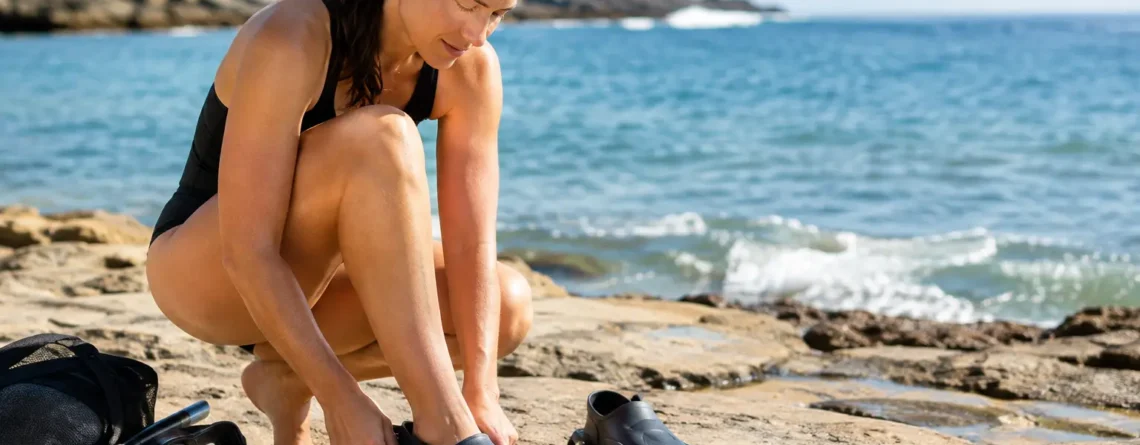
That familiar moment at squad: everyone is kicking with fins, the coach has written 8 x 50 on the board, and your bare feet suddenly feel like two damp bricks. Swim fins can be genuinely useful training gear, but only when the pair suits what you are doing. The wrong pair can rub, cramp your feet, feel wildly too stiff or spend most of the year fermenting at the bottom of your swim bag.
For regular lap swimmers, developing freestylers and triathletes, fins are usually about better kick practice, body position and a little more speed through drills. They are not compulsory kit for every swimmer, and you do not need the priciest pair to get a worthwhile session from them.
What swim fins are actually for
Swim fins increase the surface area of your feet, so each kick moves more water. That extra propulsion lets you hold a better line through the water and gives you clearer feedback on how your legs and ankles are working. They can also make drill work more productive because you have enough momentum to focus on rotation, breathing or arm timing rather than fighting to stay afloat.
For newer swimmers, fins can make freestyle feel less chaotic. You may find it easier to keep your hips closer to the surface and maintain rhythm between breaths. For stronger swimmers, they add purpose to dedicated kick sets and can make shorter, faster efforts properly spicy.
Triathletes often use fins in pool sessions for technique drills and kick conditioning. They are training equipment, though, not something you will wear in a triathlon swim. If you only swim once a fortnight and mostly cruise a few easy laps, you can safely skip them for now. A comfortable pair of goggles and consistent pool time will do more for you than a bag full of accessories.
Short or long swim fins?
Fin length is the first useful choice. It affects how the fin feels and what sort of kicking it encourages.
Short fins for pool training
Short-blade fins are the practical all-rounder for most lap swimmers. They suit flutter-kick sets, freestyle and backstroke drills, and sessions where you want to keep a relatively natural kick rhythm. Because the blade is shorter, it is easier to use a quicker, smaller kick rather than swinging your whole leg like you are trying to start an outboard motor.
They are a sensible first choice if you attend squad, swim for fitness a few times a week or are training for a triathlon. They also take up less room in a crowded pool bag, which matters when you are already carrying a towel, goggles, drink bottle and the mysterious collection of loose change that lives in every swim bag.
Long fins for slower, bigger kicks
Longer fins create more resistance and generally produce more propulsion per kick. They can be useful for swimmers working on ankle flexibility, controlled kicking and certain technique drills. They tend to encourage a longer, slower movement, which does not always match the kick rhythm you use in freestyle training.
That does not make long fins wrong. They may suit you if your coach specifically recommends them or you enjoy longer kick work. But for most adults buying their first pair for pool sessions, short fins are easier to adapt to and more versatile.
Fit matters more than the logo
A fin should feel snug around the foot without pinching your toes, crushing the top of your foot or rubbing at the heel. It should stay put when you kick, but you should not need to wage war with it on the pool deck just to get it on.
Check the size guide for the specific fin rather than assuming it will match your runners. Fin sizing can vary, and the shape of your foot matters. If you sit between sizes, the best option depends on the model and your foot shape. A narrow-fitting foot may be better in the smaller size, while a wider foot often needs room to avoid pressure points. Do not size down just because you think a tighter fit must be faster. Numb toes are not a training method.
Try your fins on while your feet are dry, then remember that pool water changes the feel slightly. Your toes should reach close to the end of the foot pocket without being bent. The heel should be secure, and there should be no sharp edge pressing into your Achilles area.
If you are buying for a child, avoid sizing up too aggressively for growing room. Fins that slide around are frustrating and can turn a straightforward lesson or training session into a lot of stopping at the wall. A little room is one thing. A fin that looks like a kayak on a small foot is another.
Soft or stiff blades: choose for your kick and sessions
Blade stiffness changes how much effort each kick requires. Softer fins are generally more forgiving, particularly for beginners and swimmers building confidence with kick drills. They are comfortable for longer sets and make it easier to maintain good movement without forcing the knees to do all the work.
Stiffer fins give more resistance and stronger feedback. They can feel satisfying for short, powerful sets, but they demand more from your ankles and legs. If your kick is currently driven mostly from bent knees, a very stiff fin can make that habit more obvious rather than magically fixing it.
For most recreational swimmers, a moderate or softer blade is the safer starting point. It lets you use fins often enough to learn from them. A fin that is so demanding you only wear it for two 25s before quietly putting it back in the bag is not great value, whatever the branding says.
How to use fins without turning every session into a fin session
Fins work best as a specific tool, not a permanent extension of your feet. Use them for a block of drills, a kick set or a few faster efforts, then take them off and swim normally. That contrast helps you notice whether you can keep some of the better body position and rhythm without extra help.
A simple pool set might include an easy warm-up, then 4 x 50 metres of kicking with fins, followed by 4 x 50 metres of freestyle focusing on a relaxed, compact kick. Keep the effort appropriate for your level and follow your coach’s programme if you have one.
Fins can also be handy with a centre-mount snorkel during technique work, as they help you maintain momentum while you concentrate on alignment. That said, beginners do not need to buy fins, a snorkel, paddles and every other brightly coloured pool accessory in one hit. Start with the item that solves your current problem. Add gear when your training gives it a job.
Looking after fins in an Australian swim bag
Rinse fins in fresh water after pool sessions, especially if they have been in salt water. Chlorine, sand and salt are not likely to make them explode on the spot, but leaving them wet and grubby is an easy way to shorten the life of most swim gear.
Let them dry out of direct sun where possible. Australian summer sun is excellent for a beach morning and less kind to rubbery training gear left on a car seat or pool deck for hours. Do not fold or force fins into a too-small compartment either. A bent blade may gradually lose its intended shape.
If you are heading to open water, remember that swim fins are not a substitute for sensible conditions, visibility gear or proper event rules. For most open-water swimmers and triathletes, fins are still mainly a pool-training tool.
When it is worth buying a pair
A pair of fins makes sense when you are swimming regularly, want to improve the quality of kick sets or have a coach giving you drill work where extra propulsion helps. They are particularly handy for adult learners who need a little support to practise balance and for triathletes who want more structure in pool sessions.
Skip the purchase if you are still working out whether swimming will become a regular habit, or if you cannot yet complete relaxed laps comfortably. Spend on the basics first: goggles that do not leak, a cap if you use one, and pool time. The humble repeat session remains stubbornly effective.
Choose the pair that feels comfortable, matches the sessions you actually do and fits a sensible budget. The best swim fins are the ones you will pack for that early-morning session, use with purpose, rinse afterwards and reach for again next week.