

September 21, 2026
When to Replace Running Shoes: 7 Signs
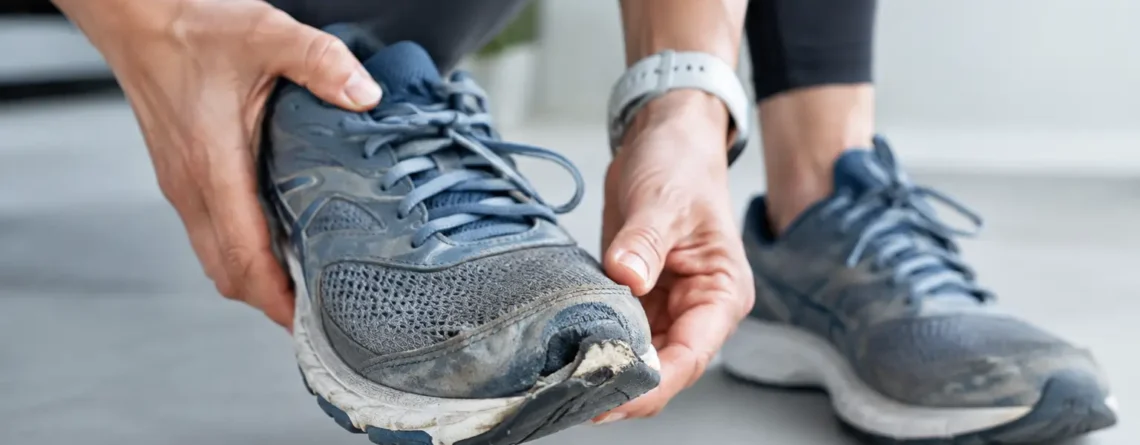
A run should leave your legs pleasantly worked, not wondering why your shins, knees or feet are suddenly complaining. If you have been wondering when to replace running shoes, the answer is rarely one dramatic moment. It is usually a handful of small signs: flatter cushioning, fading grip, a new niggle and shoes that no longer feel like they are helping you move forward.
Your runners take the impact of every foot strike. Over time, the foam compresses, the outsole wears down and the shoe loses the support it offered on day one. Replacing them at the right time can make training feel better, help reduce avoidable discomfort and keep your running routine on track.
When to replace running shoes
For most recreational runners, a pair of running shoes lasts around 500 to 800 kilometres. That range is useful, but it is not a hard rule. A lighter runner who trains on smooth paths may get more distance from a pair, while a heavier runner, trail runner or athlete doing lots of hills may wear through them sooner.
Your running style matters too. If you land heavily on one side of the shoe, have a strong heel strike or rotate through the forefoot, the outsole can wear unevenly long before the kilometres look high. The best approach is to track rough mileage and inspect your shoes regularly. Your body is also part of the check. New aches are feedback worth listening to.
1. The midsole feels flat or lifeless
The midsole is the foam layer that cushions each landing. It does not always look worn out from the outside, which is why many runners miss this sign. But you will often feel it.
A fresh pair tends to feel responsive and protective. A tired pair can feel hard, flat or oddly dead underfoot, especially on longer runs. You may notice more impact through your calves and knees, or feel as though the road is meeting your feet with every stride.
Press the foam with your thumb and compare it with an older area near the upper. Deep creases, permanent compression and uneven softness suggest the cushioning has done its job. It is time to start planning the next pair.
2. The tread is worn smooth
Turn your shoes over before your next run. The outsole is your contact point with the road, footpath, track or trail, so it deserves a quick look.
Some wear is normal, particularly under the heel and forefoot. The issue is when the rubber looks smooth, the tread pattern has disappeared or one section has worn much faster than the rest. Less tread means less dependable grip in wet conditions and less protection for the midsole underneath.
For trail runners, this check is even more important. Worn lugs can turn loose dirt, wet grass and rocky descents into a far less predictable surface. If your route has changed from dry suburban paths to muddy tracks, your shoes may need replacing earlier than the kilometre count suggests.
3. You can see uneven wear
Place both shoes on a flat surface and look at them from behind. Do they sit level, or do they lean noticeably to one side? A shoe that has collapsed or twisted through the heel is no longer giving your foot a stable platform.
Uneven wear does not automatically mean you need a highly specialised shoe. Everyone has small differences in how they move. Still, a clear tilt, a badly worn outer heel or a sole that is chewed away on one edge is a strong reason to replace the pair. If the same pattern keeps appearing in every new shoe, consider asking a qualified running specialist, physio or podiatrist for advice.
4. New aches show up without another obvious cause
A tired shoe is not the cause of every running injury. Training load, recovery, running technique, sleep, strength work and surface changes all play a role. But when an otherwise familiar run starts causing sore arches, shin pain, cranky knees or tight calves, your footwear belongs on the checklist.
Think about what has changed. Have you increased your kilometres, added speed sessions or started running on concrete more often? If the answer is no and your shoes are well used, their fading cushioning may be part of the problem.
Do not try to push through sharp, worsening or persistent pain. Rest and get appropriate professional advice where needed. New shoes can support a comfortable return to training, but they are not a substitute for managing an injury properly.
5. The upper is torn or the heel counter has lost shape
The upper keeps your foot connected to the platform beneath it. Small scuffs are cosmetic. Holes around the toe box, stretched fabric, broken eyelets or a heel collar that has collapsed are more than appearance issues.
When the upper no longer holds your foot securely, it can slide around inside the shoe. That can lead to rubbing, blisters and a less confident stride. A worn heel lining may also create friction right where you do not want it.
If the sole still has life but a lace has snapped, replace the lace. If the upper itself is splitting away from the sole or cannot hold your foot comfortably, retire the shoe from running. It may still be useful for gardening, errands or light gym sessions, but not for pounding out kilometres.
6. Your running has changed
A shoe that worked brilliantly for casual 3 km jogs may not suit a new half-marathon plan. The same goes for runners moving from a treadmill to road running, adding trails to the mix or returning after a long break.
You do not need a different pair for every session. For many runners, one dependable daily trainer is the smartest value choice. But your current pair may no longer match the demands you are placing on it. Longer weekly distance calls for cushioning that still feels supportive, while wet-weather and trail sessions need traction that has not been worn away.
This is also a good moment to reassess fit. Feet can change with age, training volume, pregnancy, injury and even the time of day. Try new shoes with the socks you run in, leave a little space in front of your longest toe and make sure your heel feels secure without being squeezed.
7. They are simply old
Even shoes with low kilometres do not last forever. Foam can stiffen and break down after years in a hot car, damp garage or sunny windowsill. If you pull out a pair that has been sitting untouched for several years, inspect the midsole and glue carefully before trusting it on a run.
Store running shoes somewhere cool and dry, away from direct heat. Let them air out after wet sessions rather than leaving them sealed in a gym bag. A bit of care will not stop normal wear, but it can help you get the performance you paid for.
How to make running shoes last longer
You cannot train hard and keep shoes new forever, but you can avoid wearing them out unnecessarily. Keep a separate pair for walking, work and errands rather than wearing your running shoes all day. Use them for running and training only, then let them dry naturally after each session.
If you run several times a week, rotating between two pairs can also help. The foam gets time to recover between runs, and you have a backup if one pair gets soaked in a downpour. Rotation is not essential for beginners, but it can be practical as your routine builds.
Avoid putting runners in a clothes dryer or leaving them on a heater. High heat can damage adhesives and foam. Remove the insoles if they are drenched, loosen the laces and stuff the shoes lightly with paper to absorb moisture.
Track kilometres without overthinking it
You do not need a spreadsheet worthy of an elite squad. Make a note of the date you start wearing a new pair and estimate your weekly distance. Most running apps can also log kilometres by shoe, which makes the process easy.
If you run 20 kilometres per week, a pair rated for roughly 600 kilometres may last about seven months. At 40 kilometres per week, that same pair could be ready for replacement in around three to four months. Use the figure as a prompt to inspect them, not a command to bin a shoe that still feels and looks sound.
When it is time for a new pair, do not wait until the old ones are completely done. Buying your replacement a little early lets you break them in gradually and keeps your training moving. At 4Sports, affordable training gear makes it easier to stay prepared for the next run, whether you are building your first 5 km habit or chasing a new distance goal.
Your shoes have already carried you through the hard sessions. Check them before the next one, trust the signs underfoot and give every kilometre the support it deserves.