

June 29, 2026
Best Gym Bag for Work and Training
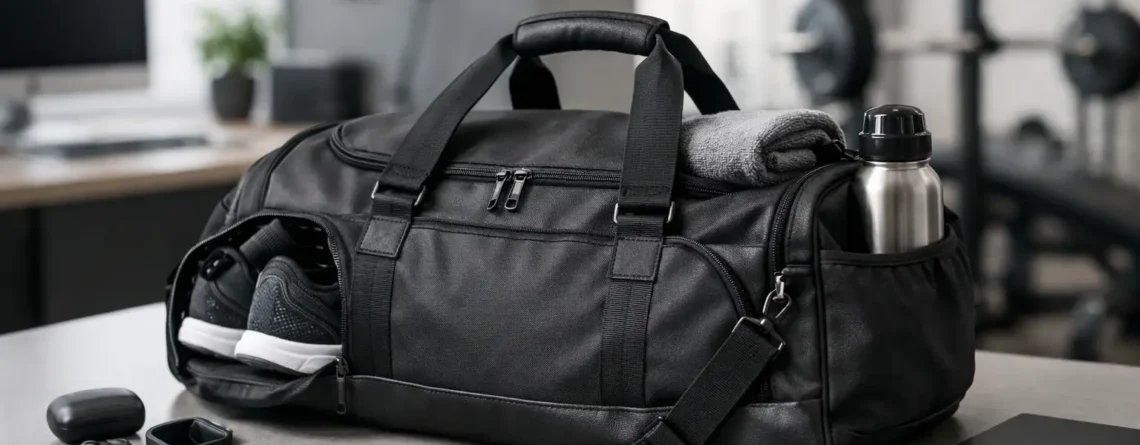
Your bag cops a fair bit when your day starts at work, rolls into training, and finishes with damp gear, a laptop and a half-crushed snack bar rattling around the bottom. That is why choosing the best gym bag for work and training is less about looks and more about getting through busy days without the usual mess.
A good hybrid bag needs to keep up. It has to look tidy enough for the office, tough enough for daily use, and practical enough to separate your clean gear from your sweaty gear. If it misses on any one of those, you feel it fast. Wet towel on your notebook. Shoes pressed against your lunch. Shoulder strap digging in on the walk from the car park.
What makes the best gym bag for work and training?
The short answer is balance. You want a bag that does more than one job well, not a bag that is excellent for one setting and annoying everywhere else.
For most people, that starts with size. Too small, and you end up clipping shoes to the outside or carrying an extra tote. Too big, and the bag becomes awkward under your desk, heavy on the commute, and easy to overpack. The sweet spot is usually enough room for a change of clothes, shoes, toiletries, water bottle, work essentials and a few small extras without feeling like you are packing for a weekend away.
Shape matters too. A structured gym bag tends to sit better in an office environment than a floppy duffel that collapses into itself. It looks neater, it is easier to pack, and it helps protect whatever else is inside. If you carry tech, this becomes even more important.
Then there is compartment layout. This is where a decent bag starts earning its keep.
The compartments that actually matter
You do not need endless pockets for the sake of it. You need the right separation. A shoe compartment is one of the biggest wins for anyone heading from work to training. It keeps dirt and odour contained and stops your shoes flattening everything else.
A wet or ventilated section is another feature worth prioritising. If you train hard, swim, or squeeze in a session before heading home, you already know how quickly moisture spreads through a bag. A separate section for sweaty kit can save the rest of your gear.
Internal organisers help too, especially if your workday includes smaller essentials like keys, earbuds, chargers, pens or a wallet. Without them, you waste time digging. With them, everything has a place and the bag stays usable instead of chaotic.
If you carry a laptop or tablet, a padded sleeve is worth having. Not everyone needs one, but if your bag doubles as your work bag, this feature shifts from nice extra to practical must-have.
Picking the right style for your routine
The best gym bag for work and training is not always the same from one person to the next. Your ideal setup depends on how you move through the day.
If you drive to work and train after hours, a larger duffel style bag can make sense. You have more room, easier access, and less concern about carrying bulk on public transport. This is a strong option if you bring full workout gear, lifting shoes, meal prep and recovery items.
If you commute by train, tram or on foot, a sleeker backpack or compact duffel is usually the smarter play. It is easier to carry, easier to store, and less likely to feel like dead weight by 6 pm. A backpack can also distribute weight better if you are carrying work gear and activewear together.
If your training varies across the week, versatility matters more than maximum capacity. You may not need a giant bag every day. In that case, a medium-sized bag with flexible compartments gives you more day-to-day value than something oversized.
Duffel or backpack?
There is no universal winner here. It depends on your load and your commute.
Duffel bags are easy to pack and usually give you wider access to the main compartment. That makes them handy for bulkier gear, towels or boxing equipment. They also tend to work well for people who train straight after work and want everything visible at a glance.
Backpacks feel better if you are moving a lot. They leave your hands free, sit more comfortably on longer walks, and can look a little more office-friendly depending on the design. The trade-off is that some backpacks are harder to pack if your gear is bulky or if you need quick access to multiple sections.
For many people, the best choice is the one that makes the commute easier. If a bag looks good but annoys you every day, it is not the right bag.
Materials matter more than branding
A bag does not need a huge price tag to perform well. What matters is whether the materials and construction suit regular use.
Look for fabric that can handle knocks, moisture and repeated packing without wearing through too quickly. A reinforced base helps, especially if your bag ends up on gym floors, the car boot or damp change room tiles. Quality zips are another big one. Cheap zips are often the first point of failure, and once they go, the whole bag becomes a hassle.
Water-resistant fabric is useful, but be realistic about what that means. It helps with light rain, a sweaty shirt or a damp towel, but it will not magically fix poor organisation. You still need proper compartment separation if you regularly carry wet items.
Straps matter as well. If the handles feel flimsy in-store or the shoulder strap has barely any padding, that annoyance will only grow once the bag is fully loaded. Comfort is not a bonus feature. It is part of performance.
Don’t buy more bag than you need
It is easy to assume bigger equals better. It usually does not.
An oversized bag gives you room to throw everything in, but that can quickly turn into clutter. You carry extra weight, lose smaller items in the bottom, and end up with a bag that feels sloppy rather than efficient. For work and training, a cleaner setup often works better.
Think about your real weekly load. Do you need space for a pair of runners, gym clothes, a towel, toiletries and a laptop? Or are you mostly carrying a light training kit and a shaker? Buying for your actual routine makes more sense than buying for the one or two rare days when you bring everything.
That said, if you are packing for swim sessions, double training days or longer commutes, having a little extra room is smart. The key is enough capacity without dead space.
Looks still count
Performance comes first, but appearance is not irrelevant when the same bag sits beside your desk in the office.
The best gym bag for work and training usually has a clean, understated design. Loud prints and overly sporty styling can work fine in the gym, but they are not always the easiest fit in a workplace. Neutral colours, tidy lines and minimal fuss give you more flexibility.
This does not mean boring. It means practical. A sharp-looking bag can still be built for hard sessions. You are after something that transitions well, not something that tries too hard in either direction.
Value is about use, not hype
There is no shortage of expensive bags promising premium everything. Some are excellent. Some are just expensive.
For most active shoppers, value comes down to how often the bag gets used and how well it solves everyday problems. If a reasonably priced bag keeps your work gear separate, carries comfortably, lasts through regular training and still looks presentable, that is strong value. You do not need to overspend to get a bag that performs.
This is where buying from an Australian retailer with local stock can make life easier too. Faster delivery expectations, straightforward support and a practical range built for real training routines all help when you want gear without the drama. That is part of the appeal at 4Sports – performance-minded products, sensible pricing, and gear that fits the way everyday athletes actually train.
A quick way to choose the right bag
If you are narrowing it down, ask yourself three things.
First, what do you carry every day, not just occasionally? Second, how do you commute? Third, what is the one thing that annoys you most about your current bag? If the answer is smell, look for better separation. If it is comfort, focus on straps and carry style. If it is mess, prioritise internal organisation.
That gives you a more useful filter than chasing trends or buying the biggest bag in the category.
A gym bag should make your day easier. It should help you move from work mode to training mode without slowing you down, without soaking your clean gear, and without chewing through your budget. Pick the one that suits your routine, and you will feel the difference every single session.