

October 9, 2026
Triathlon Nutrition Storage That Works on Race Day
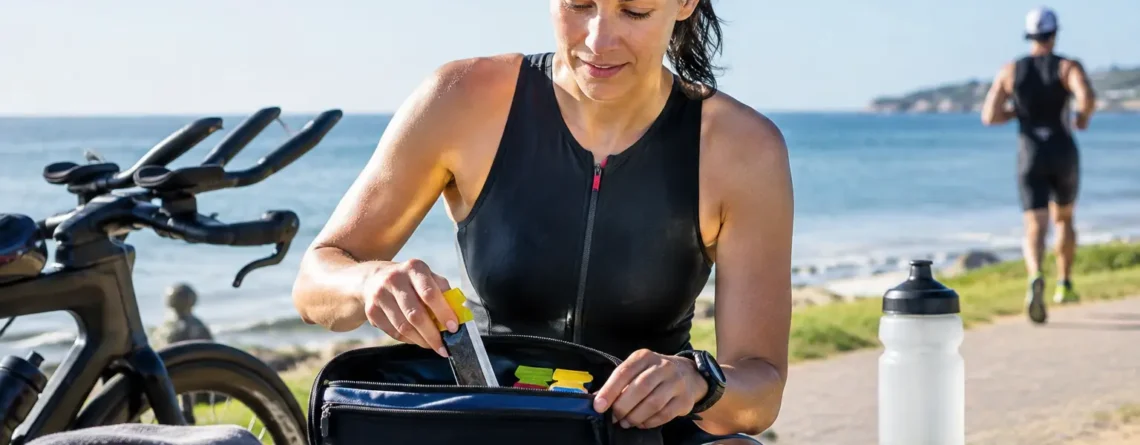
A gel wedged into the back pocket of your tri suit is fine until it works loose halfway through the bike leg. Likewise, a transition towel covered in loose wrappers, chews and mystery bottles is not a race plan. Good triathlon nutrition storage is less about owning every possible holder and more about putting the food and fluids you will actually use where you can reach them.
For a first triathlon, keep it simple. For longer events, storage starts to matter more because you are carrying more, eating for longer and dealing with aid stations, heat and the occasional bit of rain. Either way, the best setup is one you have used in training, not one you assemble at 5.30am while trying to remember where you put your bike shoes.
Start with what you need to carry
Before looking at boxes, belts or bottle mounts, work out your rough plan. How long will you be racing? Will you use course water or sports drink? Are you comfortable with gels, chews, bars, or small portions of real food? And can you open and eat it while riding without turning your handlebars into a sticky archaeological site?
A short sprint event may only require one bottle and a gel or two. Many people can store those in a bottle cage and a pocket, or on a simple race belt. An Olympic-distance race may need more deliberate placement, especially if you prefer to carry your own fuel rather than rely on what is handed out on course.
For a long-course event, the challenge is not simply fitting everything on the bike. It is making sure your food remains accessible, stays reasonably dry and does not launch itself onto the road at the first rough patch. Carrying every calorie from the start can also add clutter and weight, so it often makes sense to use course support where it suits your plan and top up from special-needs arrangements if the event offers them.
Triathlon nutrition storage on the bike
The bike is usually the best place for the bulk of your nutrition. You have both hands available more often than on the run, and you can usually carry more without feeling like a walking convenience store.
Bottles do more than carry water
A standard bottle cage is still the most useful bit of nutrition storage most triathletes own. It is affordable, easy to use and lets you carry water, electrolyte drink or a higher-calorie mix. If your drink provides a meaningful part of your energy intake, label your bottles before race morning. A bit of tape marked with the order you plan to use is enough.
Two cages suit plenty of recreational athletes. One bottle can be for water and one for sports drink. If you are relying on aid stations, make sure your cages hold bottles securely but still allow a quick grab and replacement. A cage that is too tight becomes annoying after a few kilometres. One that is too loose may donate your bottle to the road.
Rear-mounted bottle holders can add capacity, but they are not automatically necessary. They can be useful for longer rides or courses with wide gaps between aid stations. They can also be fiddlier to reach, and some setups are more likely to eject bottles on rough roads. Test them on the sort of roads you actually ride, not just on a smooth lap around the neighbourhood.
A top-tube bag is handy, not compulsory
A small top-tube bag, often called a bento box, gives gels, chews and salt tablets a predictable home. It is particularly useful if your tri suit has minimal pockets or you dislike trying to fish food out of a back pocket while riding. Choose one that opens easily with one hand and fits your bike without interfering with your knees, cables or bottle access.
The trade-off is capacity. A compact bag is great for a handful of gels and a few chews, but it will not hold a full-day buffet. Overfill it and you will spend more time wrestling zips and wrappers than eating. If your race nutrition is mostly liquid, skip the bag and keep the cockpit clear.
Some athletes tape individual gels to the top tube. It is cheap, quick and works for a small number of gels. Just remember that warm weather can soften tape, rain can make things slippery, and removing tape residue later is a fairly ordinary reward for saving a few dollars.
Keep wrappers under control
Plan where empty wrappers will go before you start. An empty pocket, a small bag or the top-tube compartment all work. Do not assume you will be able to tuck wrappers back under a gel tab at speed. That usually lasts until the first gust of wind.
Race organisers often have designated litter zones around aid stations. Use them. Apart from being the decent thing to do, it prevents your race from becoming memorable for the wrong reason.
What belongs in transition
Transition is for the items you need at a specific moment, not your entire nutrition cupboard. Put your pre-race drink and any food you plan to eat before the swim where you can see it, but keep it separate from bike and run supplies. Once transition opens and nerves arrive, clear beats clever.
For the bike leg, place any nutrition that needs to be loaded after the swim beside or attached to the bike. Bottles can go in cages before the race if event rules and your start time make that sensible. In warm Australian conditions, though, a drink sitting in the sun for hours may be less appealing by the time you return from the swim. Frozen bottles can help keep drinks cooler for a while, but they should not be your only fluid source if you need to drink early in the ride.
Your run nutrition should be easy to grab as you leave. A race belt with gel loops suits people who want a clean, repeatable setup. If you only need one or two gels and your kit has secure pockets, you probably do not need a belt. Plenty of first-timers buy one because it looks official, then discover their pockets were perfectly adequate.
Keep your area compact. A small towel can help you spot shoes and socks, but transition is not a picnic site. The less gear you spread out, the less likely you are to kick something under a rack or leave your favourite gel behind.
Storing nutrition for the run
Running makes access harder. Food bounces, bottles slosh and anything loose becomes irritating surprisingly quickly. Your choice depends on distance, course support and personal preference.
A race belt works well for gels and can carry your race number too. Check that the loops grip your chosen gel size, because not every packet is shaped the same. A waist belt with small pockets can suit chews, keys or a mobile during training, but avoid carrying unnecessary bits on race day.
Handheld bottles are useful when the course has limited aid stations, when you prefer a particular drink, or during hot training runs. The downside is obvious: you carry it the whole way. For a well-supported shorter race, it may be more comfortable to use course water and take just the gels you need.
If you are using a vest for long training days, practise with the same pockets and flasks you expect to use in an event. A vest can be excellent for self-supported sessions, but it is generally overkill for a short race with regular aid stations. More storage is only useful when it solves a real problem.
Protect food from heat, water and squashing
Australian summer racing can be hard on nutrition. Gels and chews can become very soft in direct sun, bars can turn into crumbs, and chocolate-based options have a short and messy life in a transition area. Store race food out of direct sunlight where possible and keep spare items in a small zip bag until you need them.
Waterproofing matters for wet training rides too. A simple resealable bag inside a top-tube bag or pocket can protect your food and mobile from rain and sweat. It is not glamorous, but neither is eating a gel that has spent two hours soaking in a jersey pocket.
Check expiry dates and packet seals when packing. Also open one of every item before race day if it is new to you. Some wrappers are easy to tear with tired hands; others seem designed for people wearing gardening gloves.
Build the setup in training first
The best test is a brick session: ride with your planned bottles and food, then run with whatever will be on your belt, in your pocket or in your hand. You will quickly learn whether a bag rubs your knees, gels rattle, bottle cages are loose or a pocket is impossible to reach.
Practise opening food while moving in a safe place. Learn which pocket holds empty wrappers. Rehearse loading your bike from transition. These are small details, but race morning has a habit of making small details feel enormous.
A tidy setup will not do the pedalling or running for you. It will, however, make it easier to eat and drink when you intended to, which is the whole point. Start with bottles, pockets and a simple plan, then add storage only when your training shows you genuinely need it.