

October 11, 2026
Do Beginners Need Swim Paddles for Training?
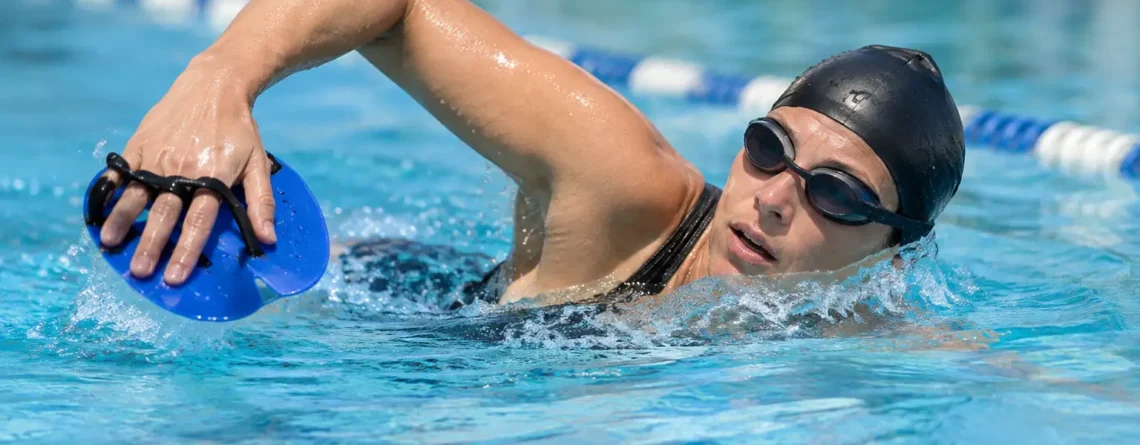
A swimmer in the next lane is wearing paddles, a pull buoy and a snorkel, so it is easy to assume you need the full kit too. But do beginners need swim paddles? Usually, no. They can be useful later, but they are not a first-week essential and they will not fix a stroke that is still finding its way.
For most new swimmers, the best early investment is simply regular pool time, goggles that do not leak every second lap, and a little patience. Paddles are a training tool, not a compulsory badge of honour for squad swimmers.
What swim paddles actually do
Swim paddles increase the surface area of your hand. That means each pull catches more water, making your arms work harder and giving you clearer feedback on what your hands are doing under the water.
Used well, they can help you notice whether you are slipping through the pull, crossing your hands over the centre line, or losing pressure on the water. They are commonly used in short, controlled sets alongside a pull buoy, especially by regular lap swimmers and triathletes building swim-specific strength.
The catch is that paddles magnify everything. A tidy pull feels purposeful. A rushed or awkward pull feels heavier, less controlled and can put more load through areas that are not ready for it. Bigger is not automatically better. It usually just means you find out sooner that your technique has gone missing.
When beginners do not need swim paddles
If you are still getting comfortable breathing to the side, swimming more than a lap or two without stopping, or keeping your body reasonably level in the water, leave paddles on the shop shelf for now. There is plenty to work on before adding resistance.
The same goes if your stroke changes dramatically as you tire. Many beginners start a session with a smooth-ish stroke, then finish by windmilling their arms towards the nearest lane rope. Paddles can make that final stage more demanding without making it more useful.
For a first triathlon, paddles are also optional. Your priority is being comfortable swimming the event distance, practising sighting if it is an open-water race, and sorting practical essentials such as goggles that suit you. No paddle set will replace those basics.
That does not mean beginners must avoid paddles forever. It means you should introduce them when you have enough control to learn from them rather than simply fight them.
Signs you are ready to try paddles
You may be ready for small paddles if you can swim consistently for around 15 to 20 minutes, breathe without holding your head up, and maintain a reasonably repeatable freestyle stroke. You do not need to look like you belong on the Australian team. You just need a foundation that holds together for more than one fast lap.
A few coached sessions can be especially helpful here. A coach may spot a crossover, dropped elbow or rushed recovery that is difficult to feel yourself. If you swim solo, filming a short clip from the pool deck, where permitted, can also show whether your stroke stays organised as you fatigue.
Another good sign is that you have a specific reason for using them. Perhaps you want a little more pulling work in a structured session, or you want feedback on holding water through your catch. “Everyone else has them” is understandable, but it is not much of a training plan.
Start smaller than you think
For a beginner or developing swimmer, choose small, technique-focused paddles rather than large power paddles. A smaller paddle adds enough resistance to provide feedback without turning each pull into a wrestling match with the pool.
Fit matters too. The paddle should sit securely against your hand without requiring you to death-grip it. Many swimmers use only the finger loop or a simple strap arrangement, depending on the paddle design. The aim is for the paddle to stay in place when your hand enters and catches the water, not to be strapped on like a gardening glove.
If you are between sizes, err on the smaller side. You can always build volume and confidence over time. The same sensible rule applies to plenty of swim gear: buy the version that suits your current training, not the version that looks most serious in a gear bag.
Keep early paddle sets short
Your first paddle session does not need a heroic main set. Try a few short repeats with plenty of rest, such as 4 x 50 metres at an easy, controlled effort. Remove the paddles for the next few repeats and compare how your hands feel in the water.
If your stroke becomes shorter, your shoulders feel unusually unhappy, or you start forcing each pull, stop using them for the day. That is not a failed session. It is useful feedback that the resistance or volume was more than you needed.
Avoid using paddles for every freestyle lap. Two or three short sets in a session is often plenty for a developing swimmer. Your normal swimming should still make up most of the work, because that is where you practise the rhythm, breathing and body position you actually want to carry into regular laps or race day.
How to use paddles without turning every lap into hard work
Think of paddles as a technique tool first and a strength tool second. Swim at a controlled pace and focus on entering cleanly, reaching forward without overreaching, then pressing water back rather than down.
A pull buoy can work well with paddles because it reduces kicking and lets you focus on the upper body. But it can also hide a sinking-leg problem that needs attention. Use the combination occasionally, not as your default setting for the whole session.
Paddles are generally better suited to freestyle than to trying every stroke in the pool. Butterfly with paddles is not the obvious place to start, unless your plan is to make Tuesday morning feel much longer than it needs to.
It is also worth separating paddle work from speed work early on. When you are learning, slow and deliberate usually beats charging through fast repeats with messy form. Once your technique is stable and you understand how your body responds, you can experiment with different efforts in a more structured programme.
What should a beginner buy first?
For straightforward lap swimming, start with comfortable goggles, a cap if you prefer one, and swimwear that lets you move freely. If you want one extra training aid, a kickboard can be useful for focused kicking, while a pull buoy may suit swimmers who want to isolate the upper body for short sets.
Fins can be handy for body position and kick drills, but they are not compulsory either. A centre-mount snorkel can help with technique drills once you have the basics, though it takes a little getting used to. None of these items needs to arrive in your bag all at once.
For many regular swimmers, the practical order is: get comfortable, become consistent, then add one tool to solve one training need. That approach costs less and gives you time to work out what genuinely helps. It also prevents the familiar sight of a very full mesh bag containing gear that has not seen chlorine since February.
Do beginners need swim paddles for triathlon?
No. If you are training for your first sprint or standard-distance triathlon, spend most of your swim time developing confidence, steady breathing and the ability to cover the distance without panic or long rests. If your event is in open water, add sensible practice in conditions appropriate to your experience, ideally with company and event-specific safety guidance.
Small paddles can become useful once you are swimming regularly and want a little variety in pool sessions. They are particularly handy during a pull-focused set when you are balancing swimming around bike and run training. But they remain optional. A well-used pair of goggles and consistent sessions will do more for a new triathlete than a drawer full of accessories.
The best swim gear is the gear that earns its place in your routine. If paddles help you pay attention to a calmer, cleaner pull, grab a small pair and use them sparingly. If you are still building the basics, save your money for pool entries, keep turning up, and let the paddles wait their turn.