

October 15, 2026
What Swim Gear Does a Beginner Actually Need?
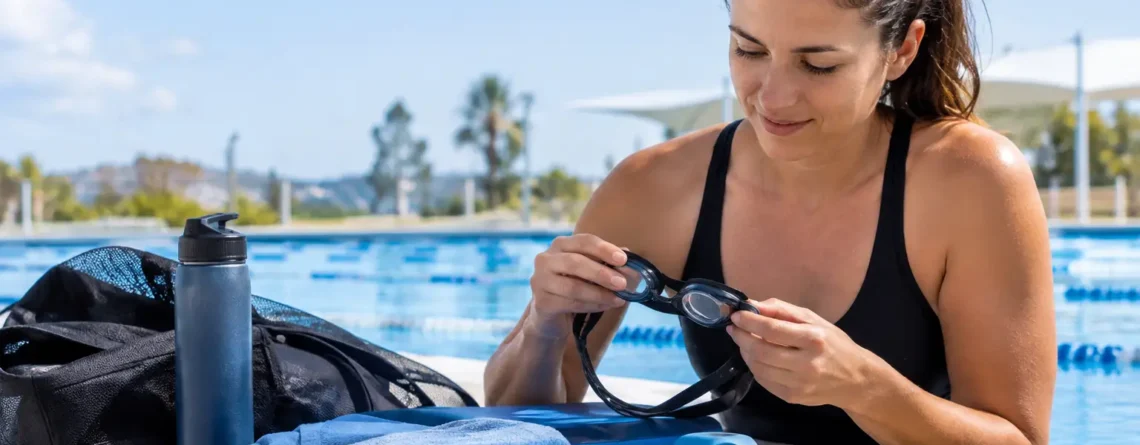
A fogged-up pair of goggles, a cap that keeps slipping and a bag full of accessories you have no idea how to use is not the ideal start to swimming. The good news is that what swim gear does a beginner actually need? The answer is less than most shop displays suggest.
For lap swimming, lessons or the first few squad sessions, start with gear that keeps you comfortable and lets you focus on the water. Add training tools once you know what your sessions look like and what you want to work on. There is no medal for owning the most pool toys.
Start with the gear you will use every swim
Comfortable goggles
Goggles are the first thing worth getting right. You need to see the wall, other swimmers and the pace clock without stopping every 50 metres to empty a lens. More importantly, goggles should seal comfortably around your eye sockets without being pulled painfully tight.
Fit matters more than a famous logo or a fancy lens coating. Before adjusting the strap, gently press the goggles to your face. If they sit in place for a moment with light suction, the seal is likely close to right. If they fall straight off, try another shape. Cranking the strap tighter rarely fixes a poor fit. It usually just leaves you with a cracking headache and impressive goggle rings for the rest of the morning.
Clear lenses suit indoor pools and early starts under cover. Tinted or mirrored lenses can be handy in bright outdoor pools and open water, but they are not essential for a beginner who mainly swims indoors. If you swim often, having a spare pair is sensible. Goggles do eventually wear out, usually when you are already running late.
Swimmers that stay put
Choose swimwear made for repeated pool use and actual swimming movement. For men, that may be briefs, jammers or fitted swim shorts. For women, a one-piece with secure straps is often the simplest option for regular laps. The best cut is the one you can forget about once you start swimming.
Loose boardshorts can drag through the water, fill with air and become annoying during kick sets. They are fine for the beach, but not everyone enjoys chasing a floating pocket around their thigh halfway through a session. You do not need expensive race gear, though. Durable, comfortable swimwear that fits properly is plenty.
A towel and a practical bag
This sounds obvious until you arrive at the pool with a gym bag that has no separate spot for wet gear. A standard towel works. A compact microfibre towel can be useful if you commute, train before work or have limited bag space, although some swimmers simply prefer the feel of a regular towel.
A mesh bag is useful later for carrying training aids because it drains and stops the whole lot becoming a soggy mess. For now, any bag that fits your swimmers, towel, goggles, drink bottle and dry clothes will do the job.
A swim cap, if it suits your pool or hair
A cap is compulsory at some pools and common in squads, but it is not a universal rule for casual lap swimming. It is useful if you have longer hair, want to keep it out of your face or would like goggles to sit a little more securely. Silicone caps tend to last longer and feel less grabby than latex, while fabric caps are comfortable but let more water through.
A cap will not keep your hair completely dry. It is there to manage hair, not perform magic. If you have short hair and your pool does not require one, you can skip it at first.
What swim gear does a beginner need for training?
Once you are swimming consistently, perhaps two or three times a week, training aids can make sessions more varied and help you focus on a particular skill. They are useful tools, not entry tickets to the pool. Start with one item that matches what you are doing rather than buying a full kit in one hit.
Fins for body position and kicking
Short swimming fins are often the most approachable first training aid. They add a little propulsion, making it easier to hold body position while you practise kicking, rotation and streamlined movement. They can also make kick sets less of a grind when your legs are still figuring out their role in this whole swimming caper.
Choose fins made for swimming rather than long, stiff snorkelling fins. A snug fit is important, but they should not pinch your toes or rub your heel raw. If you are unsure about sizing, follow the product guide and leave room for the fact that your feet may be wet, cold and slightly grumpy at 6 am.
You do not need fins for every session. Use them for planned drills or kick work, then take them off. Swimming without them still matters.
A kickboard, only if you will use it
A kickboard gives you a simple way to isolate your kick, but most pools and squads have communal boards. Ask before buying one. If you mainly swim solo and want to include regular kick sets, a board makes sense. If you only occasionally join a coached session, it may spend most of its life in the garage.
Keep your arms relaxed on the board and avoid lifting your head too high. A kickboard is not meant to turn a kick set into a neck workout.
Pull buoy and paddles for later
A pull buoy sits between your thighs and helps keep your hips higher while you focus on your arm stroke. It is useful once you can swim continuous laps with reasonable comfort and want some variety in a session. It can also show you how body position changes when your legs are not doing much work.
Hand paddles are more of a later purchase. They increase the surface area of your hands, so you can feel the catch phase of your stroke more clearly. They also place more load on your shoulders if you use a size that is too large or start flogging out long sets with poor technique.
If you are new to structured swimming, skip paddles until you have some basic stroke control or a coach has suggested them. When you do buy them, smaller paddles are generally the more sensible starting point. Bigger is not automatically better, despite what the bloke in lane three appears determined to prove.
A centre-mount snorkel for technique work
A swimming snorkel lets you keep your head still while working on alignment, balance and your catch. It can be very handy for drills, particularly if turning to breathe is distracting you from everything else happening in your stroke.
It is not essential for learning to swim. Some beginners find the breathing pattern strange at first, and that is normal. If you are still building confidence putting your face in the water, spend your money on regular pool time before adding a snorkel.
Gear for open water and your first triathlon
Pool swimming and open-water swimming share a stroke, but the gear list changes. If you are preparing for a triathlon or swimming outside the flags, visibility and safety move up the list.
A bright cap and goggles suited to changing light are sensible basics. For open water, a tow float is worth considering because it makes you easier to spot and gives you something to hold if you need a breather. It is not a substitute for sensible conditions, swimming with others or knowing the local risks.
A wetsuit depends on the event rules, water temperature and how you tolerate cold water. Do not buy one simply because someone at parkrun said you must. For a summer event in warmer water, you may not need it. For colder Victorian mornings or a race where you expect a longer time in the water, it can be a practical addition. Try the fit and practise swimming in it before race day. Wetsuits feel different through the shoulders, and transition is a poor time to discover that your zip has a personality.
After open-water sessions, a change robe can be genuinely useful for getting dry in a car park without performing a one-legged towel dance. For indoor pool swimmers, it is nice to have rather than necessary.
A sensible beginner shopping order
If you are starting from scratch, buy goggles, suitable swimmers and a towel or bag first. Add a cap if your pool requires one or it makes swimming more comfortable. Swim for a few weeks before deciding whether fins, a pull buoy or a snorkel would make your sessions better.
That approach saves money and gives you a clearer answer than any product description can. You might discover you love steady lap swimming and need nothing more. Or you might get hooked on squad sessions and find a pair of short fins earns its place in the bag quickly. Either way, reliable gear that fits and gets used beats a cupboard full of accessories every time.