

October 17, 2026
What Should Be in Your Swim Training Bag?
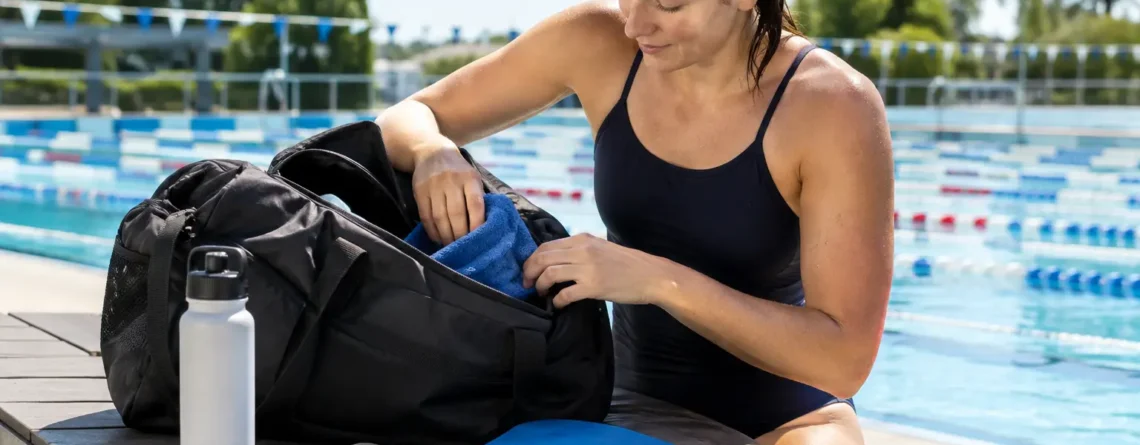
You are five minutes from leaving for an early squad session when you discover your goggles are still on the bathroom windowsill. It is a small problem, right up until you are squinting through a borrowed pair that leaks every second lap. Knowing what should be in your swim training bag? means fewer of those annoying little problems, and less money spent on gear that lives untouched at the bottom of a cupboard.
Your bag does not need to look like a swim-shop display. The right kit depends on whether you are swimming a few relaxed laps, following a structured squad program, training for a triathlon or heading into open water. Start with the basics you use every session, then add tools only when they have a clear job to do.
What should be in your swim training bag every session?
There are a few items worth treating as non-negotiable. Pack them in the same pocket every time and replacing a worn or missing item becomes much less dramatic.
- Goggles and a spare pair: Your main pair should fit your face, stay put when you push off, and give you clear enough vision to avoid swimming into the lane rope. A spare is not excessive if you train regularly. Straps snap, lenses fog, and goggles have a remarkable habit of disappearing just before a set you were actually looking forward to.
- Swim cap: Many pools require one for squads, and it keeps longer hair out of your eyes and away from your goggles. Silicone caps are durable and comfortable for most people. A cheaper latex cap is fine as a backup, but it tends to tug at hair and does not last as long.
- Togs: Pack the pair you train in, plus underwear for afterwards if you are changing at the pool. If you swim before work, a spare pair of togs can be handy too. Pulling on a still-damp pair from yesterday is one of sport’s less glamorous rituals.
- Towel: A regular towel works perfectly well. A compact microfibre towel is useful when bag space matters, especially if you walk, ride or catch public transport to the pool. It will not feel as luxurious after a shower, but it dries quickly and takes up far less room.
- Drink bottle: Pool decks can feel cool, but training sessions still leave you thirsty. Fill a bottle before you leave home so you are not relying on a temperamental drinking fountain between sets.
Add thongs or slides for the pool deck and change room, particularly at busy public pools. They are simple, cheap and far more pleasant than stepping barefoot into a mystery puddle near the showers.
Build your bag around the session you actually do
Training aids are useful when they support a specific part of your session. They are not a compulsory badge of being a serious swimmer. If you are new to lap swimming, start with goggles, cap, togs and towel. Give yourself a few weeks to settle into a routine before buying a collection of colourful foam and plastic.
Kickboard and fins for kick work
A kickboard helps isolate your kick during kick sets and gives you something stable to hold while you focus on body position. Most pools and squads provide boards, so check before buying one. It is a bulky item to carry if you only need it occasionally.
Fins are more practical for regular technique sessions. They add resistance to kicking and can help you feel a more streamlined body position while swimming drills. Short training fins suit pool work because they are easier to control in a lane than long scuba-style fins. They need to fit snugly without pinching your toes or rubbing your heels. If they hurt in the first five minutes, do not assume you need to toughen up – the size or shape may simply be wrong.
Pull buoy and paddles for pull sets
A pull buoy sits between your thighs to reduce the role of the kick during pull work. It lets you focus on your arm stroke and body alignment. It is one of the more useful additions for swimmers who follow written sessions, but it has little value if it never comes out of the bag.
Hand paddles increase the surface area of your hands, making each pull feel more demanding. They are best introduced gradually and used with good technique. Bigger is not automatically better. A modest paddle is easier to control, and regular swimmers do not need the largest option in the shop to get a useful training stimulus. If your coach has not included paddles in your program, you can happily leave them off the shopping list for now.
Centre-mount snorkel for technique focus
A front snorkel allows you to swim without turning your head to breathe, so you can pay closer attention to stroke timing and head position. It can be a genuinely helpful tool for drills, but it takes a little getting used to. The first few lengths may feel like trying to drink through a garden hose while doing maths.
Choose a snorkel if you are doing regular technique work or following a squad program that calls for one. For casual fitness swimming, it is optional. It is not a substitute for learning to breathe comfortably in freestyle.
The small things that make pool sessions easier
A decent swim bag is less about logos and more about separating wet, dry and clean things. Look for enough room for a towel and gear, a wet compartment or waterproof pouch, and pockets that stop goggles being crushed by everything else. A mesh bag inside a larger backpack is another simple option for storing wet training aids after the session.
Keep a small pouch for the bits that are easy to lose: anti-fog treatment if you use it, spare nose clips or earplugs, a hair tie, and a tiny screwdriver only if your goggles have adjustable parts that require one. A zip bag for wet goggles can protect the rest of your gear on the commute home, though letting goggles air-dry properly once you are home will help them last longer.
For post-swim comfort, pack shower gear if you need it, deodorant, clean clothes and a snack if you are going straight to work or school. For longer squad sessions, a banana, muesli bar or sandwich is more useful than arriving ravenous and buying the first expensive thing in the vending machine.
What should be in your swim training bag for open water or triathlon?
Open-water swimming asks a bit more of your bag because conditions can change quickly. The essentials remain the same, but comfort before and after the swim matters more when there is no warm change room two metres from the water.
A bright cap is sensible for visibility where rules allow it, and tinted or mirrored goggles can be helpful when swimming into low morning sun. Bring clear-lens goggles too if the light is flat, it is overcast, or you are likely to finish later than planned. One lens colour does not cover every condition.
For cooler water, bring the gear your event or swim conditions call for, including a wetsuit if you use one. A change robe or roomy towel poncho makes outdoor changing much easier on cold mornings, especially when the wind has turned a simple towel change into an awkward balancing act. A dry bag or waterproof pouch is useful for keeping your phone, keys and a warm layer dry.
Triathletes should also have a separate transition-practice kit rather than mixing everything into their pool bag. That might include race goggles, cap, towel, socks, running shoes and whatever nutrition they have already tested in training. Keeping it together makes it easier to practise transitions without searching through last Tuesday’s damp paddles.
Do not overpack just because other swimmers do
It is easy to see someone arrive at squad with fins, paddles, snorkel, two buoys and a bag the size of carry-on luggage, then decide you need the same setup. Maybe you do. More often, you need the items your program uses most.
If you swim twice a week for general fitness, a reliable pair of goggles, cap, towel, drink bottle and maybe fins is a very solid bag. If you follow structured sessions three or four times a week, a pull buoy, paddles and snorkel may earn their place. If you are training for a first triathlon, put basic swim comfort first, then add open-water and transition items as your race gets closer.
Buy gear that solves a repeat problem: leaking goggles, no kickboard available at your pool, cold outdoor changes, or a coach regularly prescribing pull sets. Skip gear bought purely because it looks like the sort of thing a swimmer ought to own. The best training bag is not the fullest one. It is the one you can grab before dawn, knowing everything inside will get used.
Before your next session, lay your current kit on the floor and remove anything that has not seen water in months. Replace the worn goggles, add the one item your training genuinely calls for, and leave a little space for the wet stuff you will be carrying home.