

October 24, 2026
What to Pack the Night Before a Triathlon
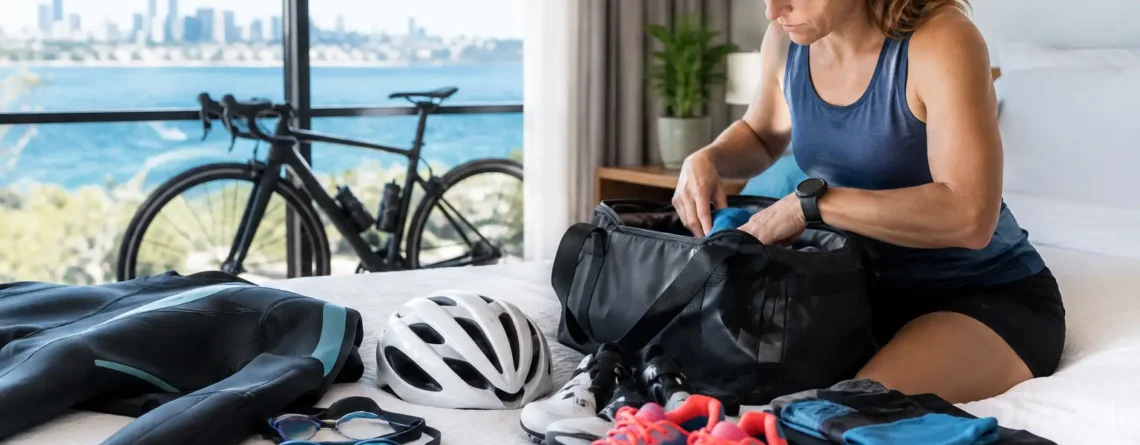
Your race morning has enough potential dramas without discovering your goggles are still drying on the clothesline or your bike shoes are sitting by the back door. Working out what to pack the night before a triathlon is less about owning every bit of gear in the catalogue and more about putting the right things in one place, in the order you will use them.
A simple pack the night before also helps first-timers settle their nerves. Once the bags are ready and the bike is checked, there is nothing useful to be gained by repeatedly opening the weather app at 10.45 pm.
Start with the race information, not your gear cupboard
Before filling bags, read the event guide one more time. Confirm your start time, venue, parking or shuttle arrangements, check-in requirements, course distances, cut-off times and rules around wetsuits, headphones, bike labels and transition access. A sprint triathlon and a long-course event need different amounts of nutrition, clothing and spares.
Check the forecast too, but do not pack for every weather event in the southern hemisphere. Pack the sensible option for the expected conditions, plus one light extra layer if the morning looks cool or wet. For an early race, lay out what you will wear to the venue as well as what you will race in. Standing around in damp race kit before a swim is nobody’s idea of fun.
Keep the event email, licence or membership details if required, photo ID and any parking confirmation together in a small pouch or on your mobile. A charged mobile is handy, but a race is not the time to depend on it for every important detail.
What to pack the night before a triathlon: the swim kit
Put all swim gear together in a zip bag inside your main race bag. It stops the smaller items migrating into obscure corners of the car boot.
For most triathlons, your swim pile should include:
- Goggles, ideally with a clean lens and strap you have already adjusted
- A backup pair of goggles, especially if your usual pair is old or prone to fogging
- Swim cap if the event does not provide one, although most races do
- Wetsuit if conditions and race rules call for one
- Anti-chafe balm, if you normally use it around the neck or underarms
- Towel, plus a separate small towel for transition if that suits your setup
- A warm top, change robe or dry clothes for after the finish
The backup goggles are one of the few genuine “pack it even if you hope not to need it” items. Goggles can snap, leak or disappear under a passenger seat with remarkable speed. They do not need to be expensive. They just need to seal comfortably on your face.
If you are using a wetsuit, check the zip, make sure it is dry enough to put on comfortably and pack a plastic bag for it afterwards. A plastic tub or large wet bag is also useful for containing wet gear after the race, particularly if you are driving home with family members who did not volunteer to sit beside a dripping wetsuit.
Skip snorkels, fins, paddles and pull buoys. They are useful training tools, not race gear, unless a very unusual event specifically says otherwise.
Make the bike bag boring and complete
Your bike is the part of the day with the most moving pieces, so give it the most attention. Do not wait until race morning to locate your helmet or discover a flat tyre. The night before, inflate tyres to your usual race pressure, inspect them for cuts or embedded grit, and make sure the brakes work properly. Spin each wheel and check that the chain is clean enough and shifting is behaving.
Then pack the essentials together:
- Bike helmet, with the straps untwisted and adjusted
- Bike shoes or trainers, depending on what you ride in
- Sunglasses if you use them and the forecast makes them worthwhile
- Race number, bike stickers and helmet sticker if supplied in advance
- Water bottles filled or ready to fill in the morning
- Nutrition you have practised with, not a mystery gel bought at the servo
- A small flat-kit: spare tube, tyre levers, inflator or pump, and a multitool
Your flat-kit needs to suit your wheels. If you use tubeless tyres, pack the relevant plug or backup tube and know how you will handle a flat. If that sounds like more mechanical confidence than you currently have, a spare tube, levers and inflator are still a sensible starting point. Practise once at home. The side of a road is a poor classroom.
A full-size floor pump is worth putting in the car even if you carry a mini-pump or inflator on the bike. Use the small setup for emergencies; use the floor pump to start the day without fuss.
Avoid adding new gear because race day feels special. New shoes, a new saddle bag or a complicated bottle system can create more hassle than benefit. A setup that is familiar and slightly unexciting is usually the right setup.
Set up the run gear before you are tired
The run is where small annoyances become very noticeable. Lay out your running shoes, socks, hat or visor and race belt together. Check that your laces are not frayed, your shoes are dry and there is nothing still tucked inside from the last rainy training session.
If you wear socks, pack them. Some athletes go sockless for shorter races, but that is a choice to test in training, not a brave little experiment at kilometre two. If you use elastic laces, make sure they are adjusted before the event. The goal is to get your shoes on easily, not to create a knot-tying challenge after a bike leg.
For a hot Australian race, a cap or visor and sunscreen can be more useful than another fancy accessory. A light running belt may help if you need to carry nutrition, but only take what the course and your normal fuelling plan require. For many sprint-distance athletes, water stations and a breakfast they know works may be enough. For longer races, pack your planned gels, chews or salt products in clearly separated portions.
Build a transition setup you can understand at a glance
Transition can look chaotic when hundreds of bikes, towels and bright shoes are lined up together. Keep your own area simple. Your bike, helmet, shoes, race belt, nutrition and towel should be easy to see and easy to reach. You do not need a huge towel spread across the whole space, and race organisers may ask you to keep belongings contained anyway.
At home, place your equipment in rough race order: helmet and shoes for the bike first, then run shoes and race belt. Put sunglasses inside your helmet if you plan to wear them on the bike. Place nutrition where you will remember it, whether that is taped to the bike top tube or tucked into a pocket. Use only methods you have tried before.
A small rubbish bag is useful for keeping packaging, old tape and wet items tidy. It is not glamorous, but neither is trying to find a gel wrapper stuck to your towel while someone squeezes past with a time-trial bike.
Pack comfort and recovery items separately
Your race bag should not become your post-race bag. Having a separate recovery bag means you are not digging around transition gear for clean undies after a swim, bike and run.
Pack dry clothes, thongs or comfortable shoes, a second towel, water, snacks you will actually want to eat, sunscreen and any usual toiletries. If the event is in cooler weather, add a warm jumper and long pants. After a cold open-water swim, you may feel perfectly fine while racing and suddenly feel chilly once you stop moving.
If friends or family are coming, give them the expected finish window, meeting point and car keys plan the night before. It prevents the classic finish-line shuffle where everyone has a phone but nobody has enough battery to call anyone.
Do one final check, then leave it alone
The most useful final task is a slow, physical check rather than another online checklist. Open your swim bag. Look at your bike. Put your helmet beside it. Check your run shoes. Confirm your race documents, keys and mobile. Set out breakfast ingredients and fill bottles if you prefer them cold from the fridge.
Then charge your watch, bike computer and mobile, set two alarms and get to bed. You do not need to polish your bike, repack everything three times or suddenly become a different athlete overnight. Arriving with familiar gear, a working bike and a calm plan is plenty. Race mornings reward preparation, not panic.