

October 29, 2026
What Not to Buy for Your First Triathlon
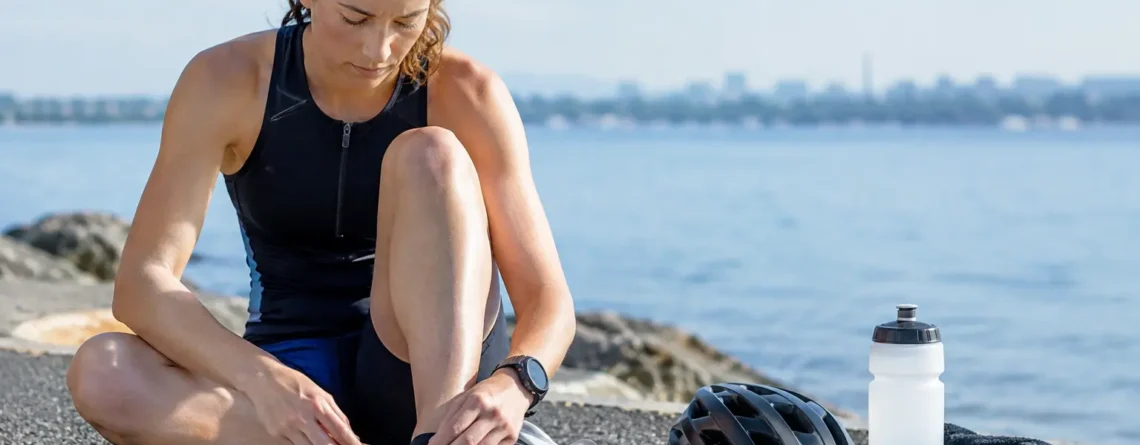
Your first triathlon can make a shopping list grow legs. One minute you need goggles and somewhere to put your race number. The next, you are comparing carbon bottle cages, aero socks and watches with more data screens than your car. Knowing what not to buy for your first triathlon is one of the easiest ways to keep the sport enjoyable – and leave enough money for entry fees, pool passes and a decent post-race brekkie.
Most first-timers do not need a garage full of specialist kit. You need safe, comfortable basics that work for your event, plus enough training to feel settled on race day. The best purchases are usually the boring ones: gear you will use repeatedly in the weeks leading up to the start.
What not to buy for your first triathlon: expensive upgrades
A triathlon bike does not have to be a triathlon bike. For a sprint or standard-distance first event, a road bike, flat-bar fitness bike or even a well-maintained hybrid can be completely suitable, provided the event rules allow it. Check your tyres, brakes, chain and gears, then make sure it fits you well enough to ride comfortably. That matters far more than having handlebars that look like they belong in a wind tunnel.
Skip the urge to buy a dedicated time-trial bike before you have raced once. They cost a fair bit, take time to set up properly and can feel twitchy if you are new to riding in an aero position. You also need to practise handling, drinking and changing gears on whatever bike you bring. A familiar bike that has done your training rides is a calmer choice than an expensive machine collected the week before the race.
The same goes for carbon wheels, deep rims and lightweight parts. They can be useful for experienced athletes chasing specific goals, but they do not solve pacing, nutrition or swim nerves. On a windy morning, deep wheels can add another thing to think about. Spend first on a bike service, puncture repair basics and a couple of training rides where you practise the route and your transitions.
Don’t buy race wheels before you own a spare tube
A spare tube, tyre levers, a small pump or inflator and the knowledge to use them are much more practical than flashy wheels. If your bike uses tubeless tyres, learn what you need for your particular setup before race morning. There is no prize for discovering a valve mismatch in the transition area while everyone else is warming up.
Do not buy a tri suit just because you think you must
A tri suit is handy because it is designed to swim, ride and run in, and it removes one clothing decision from transition. But for many first short-course races, it is not compulsory. If the event rules and water conditions allow, swimmers may be comfortable in close-fitting swimwear with cycling shorts and a top ready for the bike, or in gear they have already tested in training.
The trade-off is time and comfort. Changing clothes in transition takes longer, while bulky gym shorts can feel awful on the bike and run. If you do buy a tri suit, choose fit and comfort over logos, and test it in a swim, ride and short run before race day. A suit that rubs, rides up or chafes after twenty minutes is not a bargain, regardless of the sale sticker.
Avoid buying several outfits for one event. One proven race setup, plus warm clothes for before and after, is enough. Australian race mornings can begin cool even when the day warms quickly, so a simple old jumper, towel or change robe can be more useful than another technical top.
Skip fancy swim gear you will not train with
For the swim, good-fitting goggles are essential. Five different pairs of goggles are not. Find one pair that seals comfortably around your eyes, does not pinch your nose and stays put when you push off the wall. If you are racing outdoors, a tinted or mirrored lens may suit bright conditions; for early indoor pool sessions, a clear lens is often easier. It depends on where you actually swim.
A wetsuit is another item that needs a reality check. Some events are wetsuit-legal or wetsuit-required based on water temperature, while others are too warm for one. Read the event information rather than assuming. If you do need a wetsuit, make sure it is designed for swimming and practise in it before race day. Borrowing or hiring one for a first event can make sense if you are unsure whether open-water racing will become a regular habit.
What you can skip is a cupboard full of swim-training accessories because they look serious. Fins, paddles, pull buoys and snorkels can all have a place in structured sessions, especially when used with a coach’s direction or a clear purpose. They are not required to complete a first triathlon. If your swim confidence needs work, regular pool time, basic technique practice and open-water familiarisation where appropriate will do more than buying every accessory at once.
Also resist the giant transition towel. It is comforting, but it is not a beach day. A normal-sized towel or small mat is enough for drying your feet and marking your space. Check race rules, as some events are particular about how much gear can spread into the transition aisle.
Leave the complicated nutrition plan at home
First-time triathletes often buy an armful of gels, electrolyte mixes, chews and recovery powders without testing any of them. This is an excellent way to spend money on products that end up sticky in the back of a cupboard – or worse, discover that your stomach is not a fan halfway through the run.
For a sprint triathlon, many people can race comfortably with a sensible meal beforehand and water according to the conditions, though individual needs vary. Longer events need more planning, especially in warm weather. The key is to practise your plan during training. Use the drink bottle, snacks and timing that you plan to use on the day, then adjust based on how you feel.
Do not buy a complicated hydration system for a first event unless your bike and training genuinely call for it. One reliable bottle cage and bottle is often plenty for shorter races. If you are racing a longer distance or in hot conditions, learn the course support arrangements and practise drinking while riding. A bottle you can grab easily beats an elaborate setup you have never used.
Avoid a pricey watch for data you do not understand
A sports watch can be useful for tracking training time, distance and pace. It can also become a very expensive way to watch yourself swim slowly in circles. For your first triathlon, you do not need advanced power numbers, recovery scores, training load graphs or a dozen alerts buzzing at your wrist.
If you already own a basic watch, use it. If you want to buy one, choose simple functions that match your training: time, GPS for bike and run sessions, and water resistance suitable for swimming. Learn the buttons before the race. You do not need to record a perfect multisport file while finding your bike rack, fastening your helmet and remembering where you put your running shoes.
A cheap bike computer is optional too. A watch, mobile used safely for training, or no device at all can be fine depending on your routine. Your ability to ride steadily and avoid going out too hard is more valuable than another screen.
The gear worth sorting first
It helps to turn the question around. Before buying extras, make sure you have the basics covered: suitable swimwear and goggles, a bike in safe working order, an approved helmet that fits properly, comfortable shoes you have run in, and simple clothing for the conditions. Add a race belt if you want to make the run transition easier, plus a small bag to keep everything together.
Practise a short transition at home or after a training ride. Lay out your helmet, shoes, race clothing, water and towel, then run through the order. Helmet on and fastened before touching the bike. Bike racked before taking the helmet off. It feels obvious when you are relaxed at home and remarkably less obvious when you are puffing, wet and trying not to knock over somebody else’s bike.
Buy gear because it fixes a real problem you have noticed in training, not because it appears on someone else’s checklist. Your first triathlon is meant to teach you what you enjoy, what annoys you and what would genuinely make the next one easier. Start with dependable basics, practise with them, and let experience decide the rest.