

September 29, 2026
Running Belt vs Hydration Vest for Your Run
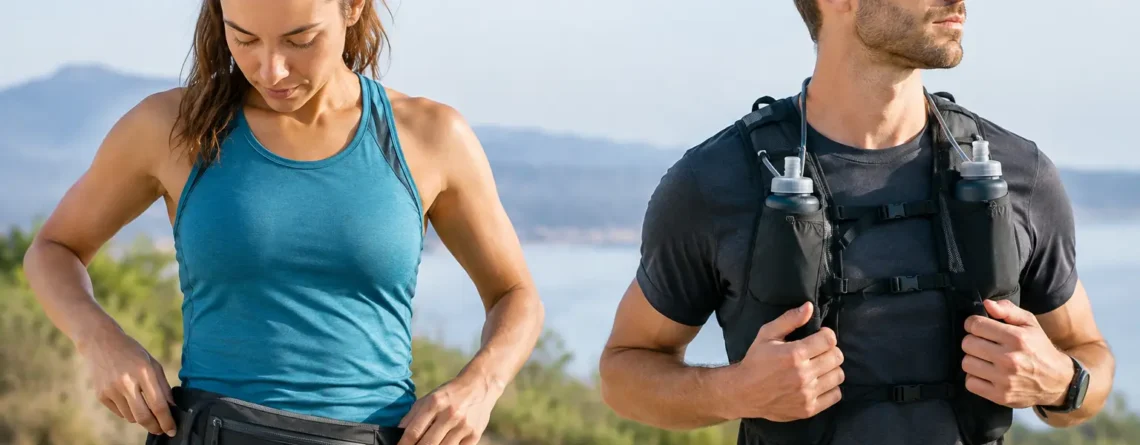
A mobile bouncing in your pocket can wreck a good session faster than a tough hill. When choosing a running belt vs hydration vest, the right answer is not about looking like a serious runner. It is about carrying what you need without thinking about it every few minutes.
For a quick 5 km around the local loop, a slim belt may be all you need. For a long trail run, a warm summer session or the run leg of a triathlon, having water close at hand can change how well you hold your pace. Choose for the run in front of you, not the biggest adventure you might do one day.
Running belt vs hydration vest: the key difference
A running belt is a compact carry option worn around the waist. Most designs have one or more stretchy zip pockets for small essentials such as a mobile, keys, cards, gels and perhaps a soft flask. It is made for runners who want a light, low-profile feel and do not need to carry much water.
A hydration vest sits high on the torso, with shoulder straps and a close-fitting body. It usually carries soft flasks on the front, and some models can hold a hydration bladder at the back. Vests also offer more storage for nutrition, a light jacket, first-aid basics and other gear needed when the run gets longer or more remote.
The trade-off is simple. A belt is lighter and less noticeable when your load is small. A vest carries far more, especially water, but needs a more careful fit. Neither is automatically better. Your distance, conditions and access to water matter most.
Choose a running belt for short, simple sessions
A running belt shines when your route is familiar and your needs are minimal. Think weekday runs before work, a treadmill session, parkrun, a social jog or laps around a well-serviced path. If there are drink fountains, shops or your car nearby, carrying a litre or more of water may be unnecessary weight.
The biggest benefit is freedom. A good belt keeps your mobile, key and fuel secure without covering your upper body. That can feel much cooler on humid mornings and more comfortable for runners who dislike straps across their chest or shoulders.
Belts are also a smart choice for race day when aid stations provide regular water. You can carry gels, electrolyte chews and your mobile while keeping your hands free. A belt with a secure pocket is particularly useful if you want your mobile accessible for safety, music or a post-run photo without stuffing it into a waistband.
Fit is everything. A belt should sit snugly around the hips or natural waist, depending on its shape, without pinching or slipping down. Load it as you would for a run before judging the fit. A belt that feels great with keys alone may bounce once a large mobile and several gels are inside.
If you are new to running, starting with a belt can be a practical and affordable move. It covers the essentials and helps you build a reliable pre-run routine without buying more capacity than you will use.
When a hydration vest earns its place
A hydration vest comes into its own when water access is limited, the weather is hot, the run is long or the route demands more self-sufficiency. For Australian runners, that can mean early starts that heat up quickly, exposed trails, coastal routes, bush tracks and long weekend training sessions where a drink fountain is nowhere nearby.
Water is the obvious reason to wear a vest, but storage is just as valuable. On a longer run, you may need electrolytes, several serves of nutrition, a light layer, a cap, sunscreen, a compact mobile, keys and basic safety items. Trying to force all of that into a belt can lead to bouncing, rubbing and frustration.
For trail runners, a vest is often the more sensible option even at moderate distances. Terrain can slow you down, weather can turn, and getting back to the car may take longer than expected. Carrying enough fluid and fuel gives you more confidence to stay focused on footing and effort.
Triathletes can benefit from a vest during longer run training too. It is useful when practising race fuelling away from organised event support, particularly for half-distance and long-distance goals. Train with the gear and nutrition you plan to use so you can learn what sits well and what does not.
A vest does add warmth. It can also feel restrictive if it is too large, badly adjusted or overloaded. That is why you should not automatically reach for the highest-capacity model. Buy the capacity that matches your typical long run, then learn how to pack it efficiently.
Fit the vest before you fill it
A hydration vest should feel secure rather than tight. It should sit high on the torso, with minimal movement through the shoulders and chest. Adjust the front cords or straps so the vest stays close when you run, but does not make breathing feel restricted.
Test it with full flasks, not empty ones. Water changes the way a vest moves, and soft flasks can slosh or drop lower as you drink. Place heavier items close to the body and use the pockets for gear you will actually reach during the run. If a pocket is hard to access while moving, it is probably not the right place for your next gel.
Chafing is another reason to test early. Wear the same shirt, socks and anti-chafe product you would use on a long run. Small pressure points around the neck, underarms or ribs can become a major distraction after an hour or two.
Match your carry system to the conditions
Distance is a helpful guide, but it is not the only one. A 10 km run in cool weather near water fountains can be easy to manage with a belt. A 10 km run in strong heat on an exposed path may call for a vest or at least a belt that carries a flask.
Ask yourself three practical questions before heading out. How long will I be running? Where can I refill or buy water? What do I need if the weather or my energy changes? Your answers will usually make the choice clear.
A belt is generally the better match when you are running for under an hour, have easy water access and only need small essentials. A hydration vest is usually the better match when you expect to be out longer, need to carry meaningful fluid, are heading into trails or are practising a fuelling plan.
There is a middle ground too. Some runners use a belt with a soft flask for medium-distance outings. Others wear a vest with only one flask on hot days, even if they do not need every pocket. The best setup is the one that lets you drink, fuel and move comfortably.
Do not carry water just because you can
More capacity can tempt runners to bring everything. That extra weight adds up, especially when water is involved. One litre of water weighs one kilogram before you add the vest, mobile, food and other gear.
For shorter runs with reliable refill points, carrying too much can make you feel hotter and less comfortable for little benefit. On the other hand, underestimating water on a hot, long or remote run can cut a session short. The goal is not to carry the least or the most. It is to carry enough for your route, pace and conditions.
Practise drinking while running as well. Small, regular sips often feel easier than waiting until you are very thirsty. If you use sports drink or electrolytes, test the concentration during training. A product that tastes fine while standing still may be unpleasant when you are working hard in the heat.
Make your choice work harder
Whichever option you choose, reserve it for running. Keeping your belt or vest stocked with regular essentials makes it easier to get out the door. Check zips, rinse flasks after use and empty old wrappers before the next session. A little preparation means less faffing when motivation is high.
For runners building towards longer distances, start with the smallest setup that safely covers your needs, then add capacity as your training grows. A running belt can handle plenty of everyday kilometres. A hydration vest gives you room to chase bigger goals when the route, weather and duration demand it.
At 4Sports, the focus is simple: dependable training gear that helps you show up, put in the work and keep chasing the next finish line. Pick the carry system that disappears once you start moving, then let the run do the talking.