

August 2, 2026
Swim Training Gear Guide for Better Pool Sessions
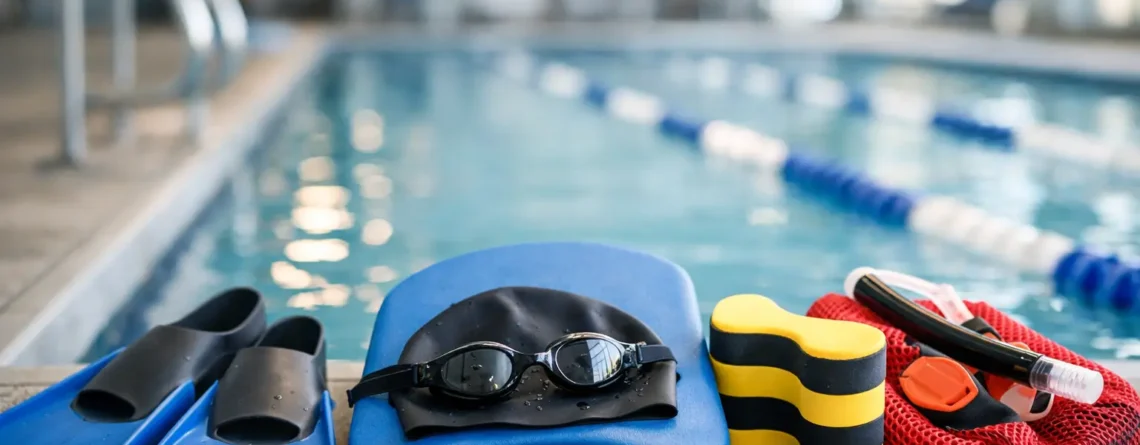
A good pool session should challenge your lungs and technique, not leave you distracted by foggy goggles, cold shoulders or gear that does not suit the set. The right kit helps you focus on the metres ahead, whether you are rebuilding fitness, training for a triathlon or chasing a faster 100 m freestyle. This swim training gear guide keeps it practical: buy the essentials first, then add tools that give each session a purpose.
You do not need a bag full of expensive equipment to improve. A few dependable pieces can make warm-ups smoother, drills more effective and post-swim recovery far more comfortable. Choose gear that matches how often you train, the water temperature and the skills you want to sharpen.
Start your swim training gear guide with the essentials
Every swimmer needs a reliable base kit. Goggles, a swim cap, suitable swimwear and a towel are the items you will reach for every session. They may sound basic, but getting them right makes a genuine difference to consistency.
Goggles should seal comfortably around the eye sockets without needing to be cranked tight. If you mostly swim indoors, clear or lightly tinted lenses keep vision bright. For outdoor pools, ocean sessions or early-morning glare, mirrored or darker lenses can be a smarter choice. Fit matters more than style. Test the seal against your face and look for adjustable straps that sit securely without pulling at your hair.
A cap keeps hair out of your face, reduces drag slightly and protects longer hair from the worst of the chlorine. Silicone caps are a popular everyday option because they are durable, comfortable and easier to put on than latex. If your pool requires a club cap, keep a spare plain cap in your bag anyway. It is the small backup that saves a session.
For swimwear, choose something built for repeated pool use and full shoulder movement. A training suit should stay in place through kick sets, turns and fast repeats. Fashion-first swimwear can work for a casual splash, but it may not hold up when you are logging regular laps.
Your towel deserves more thought than it usually gets. A compact microfibre towel is handy when bag space matters, while a larger towel offers more comfort after a cold session. If you swim before work, a quick-drying option is especially useful – no one wants yesterday’s damp towel waiting in the boot.
Training tools that make every lap count
Once the basics are sorted, add equipment based on the part of your stroke you want to improve. Training tools are not shortcuts. Used well, they help you feel body position, isolate movements and build fitness with more intention.
Fins for kick strength and better body position
Silicone swim fins are one of the most useful additions for beginner and intermediate swimmers. They add propulsion, which lets you maintain speed while concentrating on a long body line, steady kick and relaxed breathing. They are also excellent for kick sets when your legs need more work than a few laps with a board can deliver.
Shorter training fins generally suit pool work because they encourage a quicker, more natural kick rhythm. Longer fins create more resistance and power but can feel awkward in a busy lane or during faster sets. Start with a comfortable, secure fit. Fins that rub your toes or heel will turn a productive session into a painful one.
Use fins for selected drills rather than every metre. For example, wear them during a 200 m warm-up, a few streamlined kicking repeats and technique-focused freestyle. Then take them off for your main set so your normal kick and timing keep developing.
Pull buoys for a stronger pull
A pull buoy sits between your thighs to lift the hips and reduce the work done by the legs. This puts more attention on your catch, pull and upper-body endurance. It is a great tool for triathletes, swimmers returning from a lower-leg issue or anyone who tends to let their legs sink.
The trade-off is simple: a pull buoy can hide a weak kick or poor body position if you use it for too much of the session. Think of it as a focused tool, not a permanent float. Alternate pull sets with regular freestyle so the improvement carries over when the buoy is out of the water.
Kickboards, snorkels and paddles
A kickboard gives your legs a clear workload and can help newer swimmers build confidence with kicking. Keep your head position relaxed rather than lifting your chin high above the water, as that can strain the neck. For some swimmers, kicking on the side or back is a better way to reinforce a streamlined position.
A front-mounted training snorkel can be valuable for technique work because it removes the timing challenge of turning to breathe. You can focus on a balanced head position and clean stroke path. It takes a little getting used to, so begin during easy drills rather than a hard set.
Hand paddles increase resistance through the pull and can build strength awareness, but they require care. If your catch is slipping or your shoulders are already sore, larger paddles may add more load than benefit. Choose a modest size and use them for short, controlled sets. Clean technique beats brute force.
Build a swim bag that works poolside
The best gear is gear you actually bring. Organise your bag so wet items, dry clothes and small accessories each have a place. A roomy gym bag with separate compartments makes the post-session scramble easier, particularly when you are heading straight to work, uni or the school run.
Keep your core kit together: goggles in a protective case, cap, towel, swimsuit and a drink bottle. Add fins and a pull buoy if they fit your regular program. A mesh bag is useful for carrying wet gear home and letting it air out properly afterwards.
For outdoor pools, early starts and winter training, a parka or deck coat can be a game-changer. It gives you warmth before getting in and stops you cooling down too quickly between sets or after finishing. This is not just about comfort. Staying warm helps you avoid cutting a session short because you are shivering on deck.
If you train with a squad, at a triathlon club or with mates, label your gear. Black fins and plain goggles have a habit of looking identical in a crowded pool area.
Choose gear for your goal, not someone else’s
A lap swimmer building general fitness may only need goggles, cap, towel, fins and a pull buoy. That is enough to create plenty of variety across the week. A triathlete may prioritise open-water-friendly goggles, a warmer deck layer and tools that build endurance without taking up too much room in a transition-style training bag.
If you are new to structured swimming, avoid buying every tool at once. Start with one item that solves a real problem. Fins are a strong first choice if your kick and confidence need help. A pull buoy makes more sense if you want focused upper-body work. Add equipment as your sessions become more consistent.
Budget also matters. A higher price does not automatically mean a better training outcome. Look for comfortable fit, durable materials and a design suited to regular use. Affordable performance gear lets you replace worn essentials when needed and keep showing up week after week. Local Australian stock from retailers such as 4Sports can also make it simpler to get your kit sorted before the next block of training.
Care for your gear so it lasts
Chlorine, salt and heat can shorten the life of even good equipment. Rinse goggles, fins, caps and swimwear in fresh water after every session. Let them dry out of direct sun and do not leave them baking in the car. Avoid tossing goggles loose into a bag where lenses can scratch or straps can tangle.
Check your goggles for a tired strap or damaged seal before race day, not five minutes before your warm-up. Replace fins if the material begins to split, and retire a pull buoy if it becomes cracked or waterlogged. Small checks keep training uncomplicated.
The strongest swim kit is not the biggest one. It is the collection of gear that supports your next session, your next goal and the habit of getting back in the water. Pack it the night before, turn up ready and let every lap earn its place.