

October 8, 2026
Short Fins vs Long Fins: Which Are Better for Swim Training?
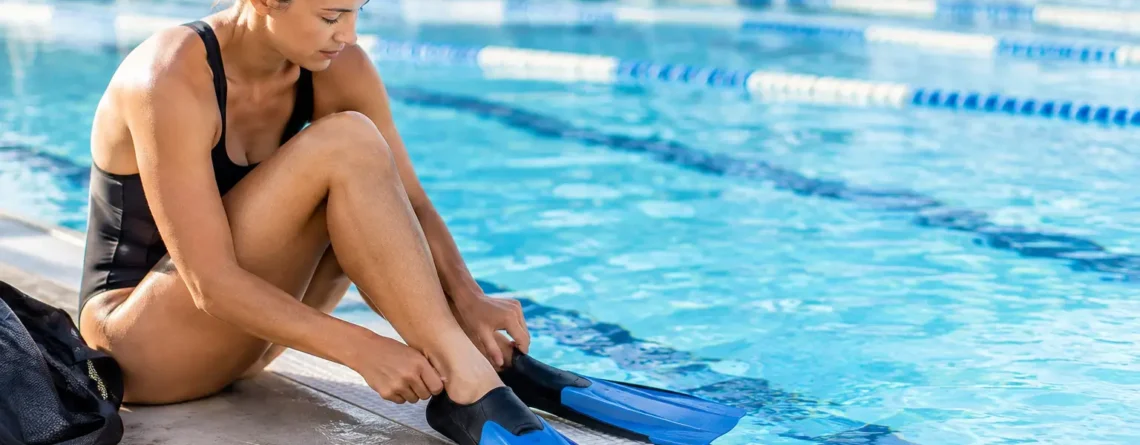
A pair of fins can turn a sluggish kick set into something you actually look forward to – or leave you feeling like you have borrowed scuba gear for squad. When considering short fins vs long fins: which are better for swim training?, the useful answer is not that one is universally better. It is about the type of swimming you do, the skills you want to practise and how much resistance your legs can handle without your kick falling apart.
For most lap swimmers, squad regulars and triathletes, short fins are the more useful all-round training choice. Long fins still have a place, particularly for beginners, snorkelling-style swimming and specific kicking work. The trick is buying the pair that will spend time in your pool bag, rather than gathering dust beside the pull buoy you swore you would use twice a week.
Short fins vs long fins for swim training
The biggest difference is blade length. Short fins have a compact blade that creates resistance without dramatically changing your kick timing. Long fins move more water with each kick, which gives you more propulsion but also slows the rhythm of your kick.
That difference matters because freestyle and backstroke use a relatively quick, compact flutter kick. A short fin lets you keep something close to that natural pattern. Long fins encourage a wider, slower kick, which can feel powerful but does not always transfer neatly back to regular swimming.
Neither type is magic. Fins can help you feel body position, practise ankle movement and add a bit of variety to a session. They cannot tidy up every technique issue by themselves. If your kick is crossing over, bending heavily at the knees or sending your hips down, a fin will not quietly solve it while you admire the extra speed.
Why short fins suit most pool swimmers
Short fins are generally the sensible starting point if you swim laps for fitness, attend squad sessions or train for triathlon. They give you enough added surface area to make kicking more productive, while keeping the movement close to a normal flutter kick.
They keep your kick cadence honest
With short fins, you usually need to keep your kick quick and driven from the hips. That makes them handy for freestyle and backstroke drills, streamline kicking and faster efforts. You get a little more speed through the water, which can make it easier to hold body position and concentrate on one technical cue at a time.
They can also make a set less of a grind. For example, if you are working through repeated 50s with a snorkel, short fins can help you maintain momentum while you focus on a relaxed head position and steady rotation. You are still swimming, not just being towed around by oversized blades.
They work across more sets
A short fin is useful for kick sets, drills, underwater dolphin kick practice, backstroke work and some full-stroke swimming. That versatility is valuable if you only want one pair of fins in your kit.
For triathletes, short fins are often a good fit because most pool training is centred on efficient freestyle. You do not need fins for every session, and you certainly do not need to wear them in open-water races, but they can add purpose to technique and kicking sessions. Use them as a training tool, then make sure plenty of your swimming is still done without them.
They are easier to manage in a busy lane
Short fins are less likely to clip a lane rope, catch another swimmer’s toes at the wall or make turns feel awkward. This is not a small consideration in a crowded public pool at 6 am, when everyone is trying to get their laps in before work and patience is in short supply.
They also tend to be easier to pack and carry. Not exciting, perhaps, but a fin that fits easily in your mesh bag is more likely to come with you.
When long fins are the better choice
Long fins are not wrong. They simply suit different jobs. Their larger blade produces more thrust and lets you move through the water with a slower, more deliberate kick.
That can be helpful for newer swimmers who are still learning how a kick supports body position. The extra propulsion gives more time to settle into a streamline, practise floating higher in the water and understand the feeling of moving forward with a relaxed ankle. A long fin can make kicking feel more rewarding for someone who otherwise goes nowhere during a kickboard set.
Long fins can also suit swimmers doing dedicated dolphin kick work, swimmers who enjoy snorkelling, or people using fins mainly for relaxed recreational swimming. If you are taking fins on a holiday for reef swimming as well as using them occasionally in the pool, a longer blade may make more sense than a compact training fin.
The trade-off is that they can mask a weak or poorly timed kick. Because the blade does so much work, it is tempting to bend your knees, kick too wide or rely on the fin rather than building a controlled movement from the hips. They can also fatigue calves and ankles more quickly, especially if you jump straight into a big fin set.
Choose based on the set, not the marketing
Before choosing a pair, think about what you will genuinely do with them over the next few months. The answer is usually clearer than comparing colourful product photos.
If you are a regular lap swimmer who wants a versatile tool for drills and kicking, choose short fins. If you are training for a triathlon and want to improve your feel for freestyle without loading your bag with specialist gear, choose short fins. If you are in a swim squad, check what the coach normally uses, but short fins are commonly the practical option.
If you are new to swimming and kicking feels like hard work for very little movement, long fins may make sessions more enjoyable while you build confidence. If your main use is recreational ocean swimming or snorkelling, longer fins may also be more appropriate.
For parents buying for a child, follow the requirements of their swim school or squad first. Some programmes specify a fin style for a reason, particularly where the sessions include drills and shared lanes. Avoid sizing up too far in the hope they will grow into them. A loose fin rubs, slips and makes it hard to kick properly.
Fit matters more than a fancy blade
A fin should feel secure around your heel and foot without pinching your toes or crushing the top of your foot. There should not be enough room for your foot to slide around inside the pocket. That movement wastes energy and is a reliable way to end up with rubbing after a longer set.
Try fins on dry if you can, remembering that they should be snug rather than loose. If you are between sizes, the product sizing guide is worth checking because fit can vary by shape and material. A very tight fin is not automatically a better fin. Your feet may swell slightly in the water, and a painful pair will be abandoned quickly.
Use fins with clean feet and rinse them in fresh water after pool sessions, particularly if you swim in heavily chlorinated water or take them to the beach. Let them dry out of direct sun. Leaving them baking on the back seat all summer is not kind to rubber or silicone, and it gives the car a very specific pool-bag aroma.
How to use fins without becoming dependent on them
Fins work best when they have a job in the session. Add them for a short block of kick work, body-position drills or technique-focused swimming, then take them off and carry that same feeling into regular laps.
A simple approach is to use fins for a few 25s or 50s after your warm-up, focusing on pointed-but-relaxed toes, a small kick from the hips and a stable body line. Then repeat a similar effort without fins. You may move slower, obviously, but you should be able to notice whether your kick stays compact and controlled.
Avoid wearing fins through every swim. They can be fun, and going faster is satisfying, but regular unassisted swimming still tells you more about your actual technique and fitness. Think of fins as a useful spanner in the toolbox, not the whole toolbox.
The practical call
For one pair that suits most swim training, buy short fins. They are the better all-round option for fitness swimmers, squad sessions and triathlon pool work because they support a natural kick rhythm and fit a wide range of drills.
Choose long fins when you specifically want extra propulsion for beginner confidence, relaxed snorkelling or slower, deliberate kick work. And if neither use sounds like your normal session, skip fins for now. A comfortable pair of goggles and a consistent swim routine will do more for your training than another piece of gear sitting wet in the boot.