

October 18, 2026
Can Swim Paddles Cause Injury? Use Them Safely
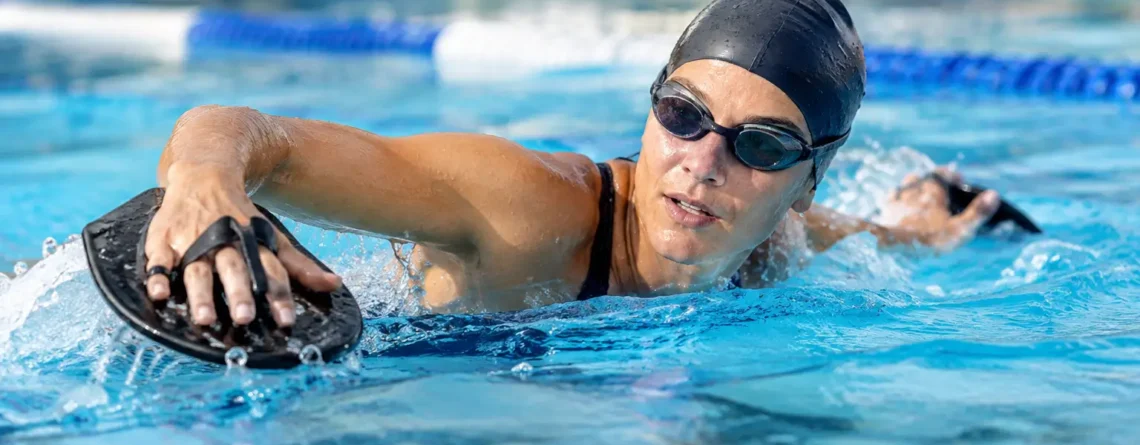
A set of swim paddles can make an ordinary pull set feel very honest, very quickly. They increase the amount of water your hand catches, so every flaw in your stroke has a little more volume behind it. Can swim paddles cause injury? They can contribute to shoulder, wrist or elbow pain when they are too large, used too often, or paired with tired technique. Used sensibly, though, paddles are a useful training tool rather than something to fear.
The key is to treat them as a short, purposeful part of a session, not as compulsory kit for every lap. If your shoulders are already grumbling after a week of swimming, work deadlines and sleeping awkwardly, paddles are not likely to sort that out.
Why swim paddles can cause injury or soreness
Paddles create more resistance than your bare hand. That is their whole job. More surface area means you need more force to pull through the water, and the muscles and joints around your shoulder have to manage that extra load.
If your stroke is tidy and you add paddles gradually, that load may be manageable. If your hand enters wide, your elbow drops through the catch, or you press hard while crossing the centre line, the paddle makes those habits harder on the body. It is a bit like putting a heavier weight on a wonky gym movement. The weight is not evil. It just gives poor form fewer places to hide.
Shoulder soreness is the common concern because swimming is already repetitive. The rotator cuff and surrounding shoulder muscles help control each pull and recovery. Add large paddles, plenty of metres and a rushed return to the pool after time off, and you have a fairly predictable recipe for an unhappy shoulder.
Wrists and elbows can also complain. This is more likely when the paddle strap is too tight, the paddle does not suit the shape of your hand, or you are forcing your wrist into an awkward angle to keep it on. Numbness, tingling, swelling, sharp pain or pain that changes how you move are good reasons to stop using paddles and get advice from a qualified health professional.
Paddle size matters more than most swimmers think
Bigger is not automatically better. In fact, for most recreational swimmers and triathletes, an enormous paddle is usually more hassle than help. It may feel satisfying for 25 metres, but that does not mean it belongs in a 2 km session.
A paddle should generally extend only a little beyond your fingertips and hand width. A smaller or medium paddle gives you feedback on your catch while keeping the added load more reasonable. It suits swimmers building technique, fitness swimmers adding variety to lap sessions, and triathletes who need to arrive at the bike and run with shoulders still capable of putting on a T-shirt.
Large paddles have a place for experienced swimmers who have sound technique, a clear reason for using them and a program that allows for the extra load. That is a narrower group than paddle packaging sometimes suggests. If you are unsure, start smaller. You can always add a few more repeats later. Undoing a sore shoulder before your next race is less convenient.
Fit matters too. Your hand should sit naturally on the paddle without the straps digging in or forcing your fingers to grip. Some swimmers prefer using only a finger loop, while others like wrist tubing for security. Either way, you should not be clenching to stop the paddle flying into lane rope territory.
Technique first, then resistance
Paddles work best when you use them to notice what your hand is doing. Aim for a relaxed hand entry, a stable wrist and an early catch where the forearm helps hold water. The pressure should feel connected through your hand and forearm, not like you are yanking water backwards with your shoulder.
A useful test is whether you can maintain the same stroke rhythm with paddles as without them. If your stroke becomes shorter, your shoulders hitch towards your ears, or you feel yourself muscling every pull, reduce the paddle size, slow down or take them off.
This is especially relevant during early-morning squad sessions. When you are still half asleep and the set says paddles, pull buoy and 10 x 100, it is tempting to just get on with it. But fatigue changes technique. If your catch falls apart late in the set, swapping to bare hands is not quitting. It is making the sensible call before one questionable 100 becomes a fortnight of modified swimming.
Do not rely on paddles to fix your stroke
Paddles can reveal a slipping catch because they feel unstable or place extra pressure on a poor pull. They do not teach good technique by themselves. For a newer swimmer, a few lengths of sculling, single-arm drills or easy swimming with full attention on body position may be more useful than piling on resistance.
If you are returning to swimming for fitness or training for your first triathlon, paddles are optional. Goggles that do not leak and regular pool time will do more for your swimming than buying every accessory in the aisle. Add paddles once you can swim comfortably and want a specific tool for catch awareness or short strength-focused work.
How to use paddles without overdoing it
Start with a small dose. For many swimmers, 10 to 15 minutes within a session, including easy recovery between repeats, is plenty. You do not need paddles for the warm-up, the main set and the cool-down. A couple of short blocks are often enough to get the training effect without turning every stroke into a tug-of-war.
Build paddle volume slowly across several weeks, particularly if you have increased your overall swimming recently. More pool sessions, harder intervals, open-water practice and gym work all count towards your total shoulder load. The body does not separate them into neat little categories just because your training app does.
Use paddles on controlled freestyle repeats rather than when you are exhausted and chasing the clock. Pairing them with a pull buoy can be useful because it reduces kicking and lets you focus on the upper body, but it also concentrates the work through your arms and shoulders. Keep the set shorter than you might without the buoy.
Four simple checks help keep paddle work sensible:
- Choose a paddle close to your hand size rather than the biggest option available.
- Use paddles for selected drills or repeats, not every metre of every swim.
- Stop if pain is sharp, persistent or alters your stroke.
- Leave at least some sessions paddle-free so you keep a feel for relaxed, natural swimming.
That last point matters. A swimmer who only feels powerful with paddles may be using them as a crutch rather than a tool.
When to leave the paddles in your swim bag
Skip paddles if you have current shoulder, wrist or elbow pain, especially if it is worsening during swimming. The same goes if you are returning after an injury, unless a qualified clinician or coach has helped you plan the return. Paddles add resistance. They are not rehabilitation equipment by default.
It can also be smart to skip them during a heavy training week. Triathletes often underestimate how much arm fatigue comes from open-water sessions, wetsuit swimming, strength work and the general chaos of fitting training around life. If your shoulders feel tight after a long ride in an aggressive position, a hard paddle set may not be the best follow-up.
For children and developing swimmers, paddle use should be supervised and modest. Their focus is usually body position, breathing and basic stroke skills. There is no prize for making young swimmers pull harder before they can hold form.
A practical paddle routine for regular swimmers
If you are healthy, comfortable in the water and want to use paddles once or twice a week, keep it uncomplicated. After an easy warm-up, swim a few short technique repeats without paddles. Then add a block such as 6 x 50 metres with small paddles at a controlled effort, taking enough rest to keep your stroke neat. Remove the paddles and finish with relaxed swimming.
Pay attention to how your shoulders feel later that day and the next morning, not just in the pool. Mild muscle fatigue after a new session can happen. Repeated joint pain, loss of range of motion or discomfort that hangs around is a sign the load, fit or technique needs attention.
Good-value paddles do not need a famous logo to do their job. Look for a size that suits your hand, comfortable straps and a shape you can wear without fighting it. Then use them with a reason. The best paddle session should leave you feeling like you have learned something about your stroke, not like your shoulders have been through a washing machine.