

September 23, 2026
Swim Paddle Technique for Stronger Strokes
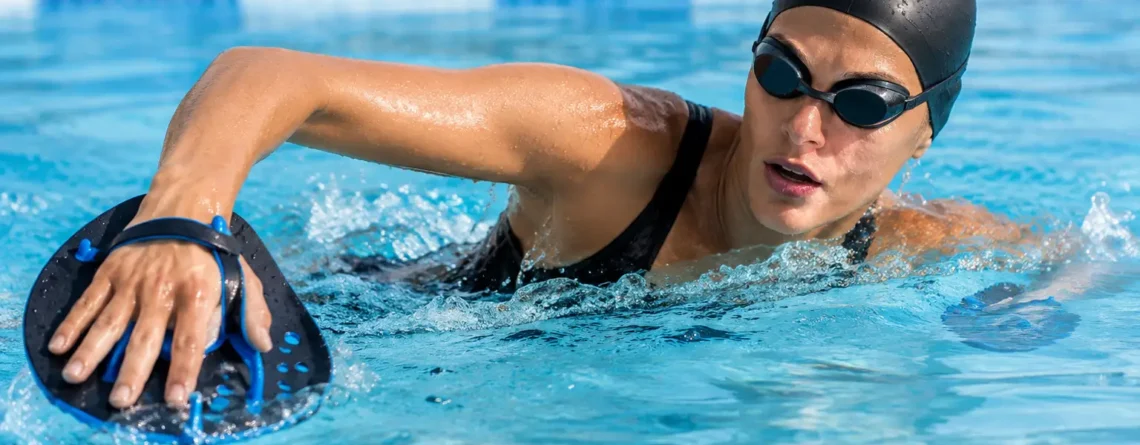
A paddle that slips, twists or smacks the water is giving you instant feedback. That is why swim paddle technique matters more than simply choosing the biggest blade on the shelf. Used well, paddles help you feel a firmer catch, build swim-specific strength and make each stroke more purposeful. Used poorly, they can overload tired shoulders and teach you to pull water in the wrong direction.
For lap swimmers, triathletes and anyone chasing a more confident freestyle, the goal is simple: use paddles to improve the stroke you already want to own. Start controlled, stay honest with your form and let the water tell you what needs work.
What paddles should feel like in the water
Hand paddles increase the surface area of your hand. More surface means more resistance, so small errors become much easier to notice. If your wrist bends back, your elbow drops or your hand enters too wide, the paddle will usually wobble, catch air or put awkward pressure through the shoulder.
A good pull should feel connected from fingertips through your forearm, lats and upper back. The paddle does not create that connection for you. It highlights whether it is there.
Think of the paddle as a feedback tool first and a strength tool second. This mindset keeps the session productive, particularly if you are newer to structured swim training. Bigger paddles can feel powerful for a few laps, but clean movement with a smaller paddle will usually take you further.
Swim paddle technique starts with the catch
The catch is the point where your hand and forearm find a solid hold on the water after entry. It happens early in the stroke, before you begin driving the arm back. Most paddle problems begin here.
Enter with the hand in line with the shoulder, not crossing over the centre line. Let the fingertips enter first, then extend forward without forcing the shoulder too high. From there, press the fingertips towards the pool floor while keeping the elbow closer to the surface. Your forearm should begin to angle down, creating a broad surface that can hold water.
Avoid pressing straight down. That lifts the front of your body rather than moving you forwards. Instead, set the hand and forearm, then press the water back as your body travels past that anchor point.
A useful cue is: fingertips down, elbow up, water back. Keep it simple. Trying to think about six technical details halfway through a hard set rarely works.
Keep the wrist firm but not tense
Your wrist should be neutral and supported, with the paddle sitting flat against the palm. A floppy wrist lets water escape around the blade and can make the paddle feel as if it is peeling away from your hand.
Firm is not the same as rigid. Clenching your hand, locking the wrist and muscling through every pull will create tension where you do not need it. Let the fingers sit naturally against the paddle, maintain light pressure through the straps, and focus on a stable hand shape.
If a paddle constantly shifts, first check the way you are entering and catching. Tightening straps is not always the answer. In fact, many swimmers benefit from using fewer straps, or no wrist strap where the design allows, because it exposes a poor catch straight away.
Pull back, not under your body
Once the catch is set, accelerate the hand backwards. The hand may travel slightly inward under the body, but it should not sweep dramatically towards the middle or cross past it. A wide, uncontrolled S-shaped pull can waste energy and place extra stress on the shoulder.
Keep the elbow bent as the pull develops. The exact angle varies with flexibility, body position and stroke rate, so there is no single perfect shape for every swimmer. What matters is that you maintain pressure on the water rather than dropping the elbow and pushing down.
Finish the stroke near the hip, then let the hand exit cleanly. Do not keep pressing until the arm is completely straight behind you. That late push often adds little propulsion and can encourage the shoulder to roll forward.
Choose a paddle size that matches your training
Paddle size is a training decision, not a badge of strength. Smaller paddles are often the better option for technique work, frequent swimming and athletes returning after a break. They provide feedback without turning every lap into a heavy upper-body session.
Medium paddles can suit swimmers with a consistent stroke who want more resistance for controlled pulling sets. Larger paddles have a place, but they demand excellent mechanics and sensible programming. They are not the default choice for building a better freestyle.
If you are unsure, err on the smaller side. You can always add distance, reduce rest or increase pace as your form improves. It is harder to undo the habits created by a paddle that is too large for your current shoulder strength or skill level.
A paddle should sit comfortably around the hand without extending so far beyond the fingertips that it feels like a shovel. Look for a secure fit, smooth edges and a shape that suits the stroke you are training. A narrow blade can encourage a clean catch, while a broader blade provides more resistance. Neither is automatically better. It depends on your goal.
Build paddle work into a smart session
Paddles work best in short, intentional blocks rather than as the only tool in the lane. Warm up without them first. You need to establish rhythm, body position and comfortable shoulder movement before adding load.
For a technique-focused session, try 6 x 50 metres freestyle with paddles at an easy to moderate effort. Rest for 15 to 20 seconds between repeats. Count strokes for the first 25 metres and aim to keep the second 25 just as controlled. If your stroke count climbs sharply or the paddle begins slipping, slow down and reset.
For a little more strength endurance, swim 4 x 100 metres using paddles and a pull buoy, with 20 to 30 seconds rest. Hold an effort where you could still describe your technique cues at the wall. The pull buoy can reduce kicking demands and help some swimmers focus on body line, but it should not become a way to hide a sinking chest or a weak catch.
Mix paddle work with normal swimming. For example, alternate one 50 with paddles and one 50 without. Notice whether the feeling of pressure on the water carries over when the paddles come off. That transfer is the point.
Common mistakes that cost speed and shoulders
The most common error is going too hard too soon. Paddles create resistance immediately, and the shoulders are not always ready for it. Limit your first few sessions to a modest amount of paddle swimming, then build gradually across several weeks.
Another mistake is pairing big paddles with tired technique. When fatigue causes the elbow to drop, the load shifts towards smaller shoulder muscles. Stop the paddle set if you feel sharp pain, pinching at the front of the shoulder, numbness or a movement that feels different from normal muscle fatigue. Rest and seek advice from a qualified health professional if symptoms persist.
Breathing can also unravel the pull. Lifting the head to breathe drops the hips and encourages the lead hand to press down for balance. Rotate the body to air instead, keeping one goggle in the water if your mobility allows. A steadier head position gives the paddle a far better platform to work from.
Finally, do not confuse noisy paddles with a powerful stroke. A clean entry is quiet. If the paddle slaps flat onto the surface, slow the recovery and let the fingertips lead.
Use paddles alongside the right gear
A dependable pair of paddles is a practical addition to a swim bag, especially when paired with a pull buoy for focused pull sets and silicone fins for body-position drills. At 4Sports, swimmers can build a training setup around the essentials without paying elite-level prices for every session.
Keep the gear simple and use each piece for a clear reason. Fins can help you feel a higher body line, a pull buoy can reduce lower-body distraction, and paddles can sharpen the catch. None replaces regular practice of a balanced, relaxed freestyle stroke.
Make every paddle length count
The best paddle sessions do not leave you fighting the water. They leave you with a clearer sense of where your hand catches, how your forearm holds pressure and how a strong stroke should feel. Start small, swim with control and take the paddles off while the movement still feels sharp. That is how better technique becomes faster, more confident swimming when it matters.