

October 27, 2026
First triathlon checklist: what to bring on race day
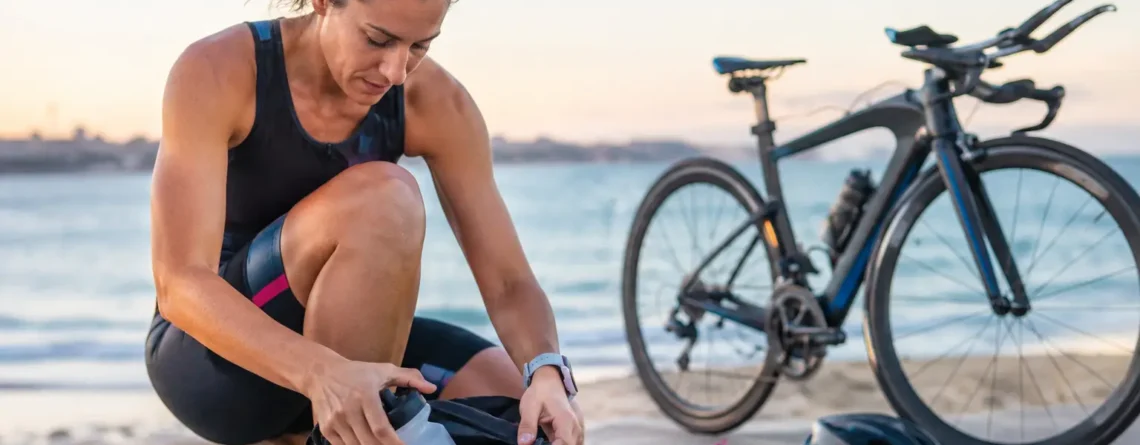
The car park is dark, the queue for the portable loos is already suspiciously long, and you have just realised your goggles are at home on the kitchen bench. That is exactly what a first triathlon checklist: what to bring on race day is for. Pack the night before, keep it simple, and save your brainpower for the swim, bike and run.
A first triathlon does not require a shed full of expensive gear. It does require a few non-negotiables, a plan for wet clothes, and a little attention to the event instructions. Read the athlete guide first. Distances, transition layout, wetsuit rules, bike requirements and whether you need to rack your bike the day before can all change what belongs in your bag.
Your first triathlon checklist for race day
Think in zones rather than throwing every bit of sports gear you own into one bag. You need items for registration, the swim, the bike, the run and afterwards. Pack each group in a separate bag or use smaller dry bags inside one larger bag. It makes finding a safety pin at 6.15 am much less of a scavenger hunt.
The non-negotiables
Start with your photo ID, race confirmation or QR code if required, and any membership details the organiser has asked for. Put these in an easy-to-reach pocket, not underneath your wet towel.
For the swim, pack goggles, a swim cap if the event does not supply one, and a wetsuit if you plan to wear one and it is permitted. Most events provide a coloured race cap, so check before buying or packing three caps just in case. Bring a spare pair of goggles if you have them. Goggles are small, easily misplaced, and suddenly very precious when the start horn is close.
Your bike, helmet and shoes are the obvious bike essentials. Check the helmet for cracks, make sure the straps and buckle work properly, and confirm it meets the race organiser’s requirements. A race official may check it before you enter transition. Bring your race bib or bike sticker if it was posted to you, plus a basic repair kit: spare tube or tubes that fit your tyres, tyre levers, a pump or CO2 inflator, and a small multi-tool. You may never touch them, which is exactly how you want the day to go.
For the run, your runners, socks and race belt or safety pins are enough for many beginners. A race belt is handy because it lets you put your bib on after the swim without poking holes in your tri top. It is useful, not compulsory. Safety pins work perfectly well if that is what you have.
What goes in transition
Transition is simply the space beside your bike where you change from swim to bike, then bike to run. The goal is to make it easy to spot what you need, not to build a small outdoor shop.
Lay out your helmet upside down on or beside your shoes, with the straps open. Place your sunglasses inside the helmet if you are using them. Put your cycling shoes beside it, or clip them to the pedals only if you have practised doing that safely. For a first race, shoes on the ground are usually calmer and quicker than trying a new flying mount in front of a crowd.
Set your runners where you can slip into them after the bike leg. If you use elastic laces in training, they can make this simpler, but standard laces are fine. Roll your socks so they are easy to grab, or skip socks only if you have already trained that way. Race day is not the time to find out whether your shoes and bare feet are lifelong enemies.
A small towel can mark your spot and give you somewhere to stand while you sort yourself out. Keep it compact. Transition rows can be tight, and organisers usually do not want a beach towel spreading across the aisle. If rain is likely, a small plastic bag over your shoes and socks can help. Remove it before the race starts.
What to wear for each leg
For most sprint and shorter triathlons, a tri suit or swimwear with a top you can ride and run in is the easiest option. A tri suit is designed to dry reasonably quickly and has a thin pad for the bike. You do not need a heavily padded cycling short for a short event, and it can feel wet and bulky on the run.
If you are more comfortable in bathers for the swim, you can pull on shorts and a shirt in transition. That is completely valid, especially for a first event. It may take a little longer, so practise once at home when you are damp. Cotton is generally best left out of the plan because it holds water and can rub.
A wetsuit depends on the water temperature, event rules and what you are comfortable swimming in. It can feel warm and buoyant in cooler open water, but it is not always required and it is not worth buying blindly for one event. Check the athlete guide and, if possible, try one in the water before race morning. A wetsuit that fits badly is a long way from relaxing.
Fuel and fluids: keep it familiar
Bring a drink bottle for the bike, even for a short race. You may also want water for before and after your start, especially if it is a warm Australian morning. Check whether aid stations are available, but do not rely on a particular brand or flavour turning up when you need it.
For a sprint triathlon, you may not need food during the race at all. It depends on your duration, breakfast timing and what you have practised. For a longer event, pack the gels, chews or bars you have used in training, plus a little extra in case the morning runs late. Do not try a new caffeinated gel because the wrapper promises big things. Your stomach has no interest in race-day marketing.
Bring a simple post-race snack as well. A banana, muesli bar or sandwich is handy if the event food is delayed or not to your liking. You will probably be hungry, damp and not in the mood to negotiate with a food truck queue.
Small things that make the morning easier
These items are not always race essentials, but they solve common first-triathlon problems:
- Sunscreen and lip balm, applied before you enter transition if conditions call for it.
- Anti-chafe balm for areas you already know can rub during training.
- A warm layer, change of clothes and thongs for after the finish.
- A rubbish bag or wet bag for soggy swim gear, towels and muddy shoes.
- A mobile, charger or power bank, plus car keys stored somewhere secure.
- A small amount of cash or a card for coffee, parking or a post-race snack.
If you are racing in cooler conditions, add a change robe or oversized towel to the after-race pile. Standing around in wet gear after an early open-water swim gets cold quickly, even when the rest of the day looks decent.
What you can leave at home
Beginners often overpack because triathlon gear can make every small accessory sound essential. Usually, it is not. Leave behind anything you have not used in training, multiple outfit options, large speakers, elaborate tools and enough nutrition for an expedition.
You do not need swimming fins, paddles, a pull buoy or a snorkel on race day. They are useful training tools for some swimmers, but they stay at home for the event. Likewise, save new shoes, a new saddle, new goggles and untested clothing for another week. Familiar gear is boring in the best possible way.
If you are unsure whether to take an extra item, ask one question: will it solve a problem I expect to have, based on training or the event guide? If the answer is no, skip it. A lighter, organised bag is easier to manage than a boot full of maybes.
Do a 10-minute check before you leave
The evening before, inflate your tyres to the pressure you normally use, charge your bike computer if you use one, and check that your bike is in a rideable state. Pack your nutrition and fill your bottles in the morning if you prefer them fresh. Put your helmet, shoes and goggles together by the door, not scattered across three rooms.
On race morning, arrive with enough time to register, rack your bike, visit the loo, walk through the transition exits and settle your nerves. Find the swim entry, bike mount line, bike dismount line and run exit. Knowing where you are going is worth more than shaving ten seconds from a transition you have never practised.
Your first triathlon is allowed to be a little messy. Pack the essentials, use the gear you know, and give yourself enough time to breathe. Once you are standing at the water’s edge, the only item that really matters is the one you brought with you: a calm enough head to start.