

October 19, 2026
How Should Swimming Fins Fit? A Simple Check
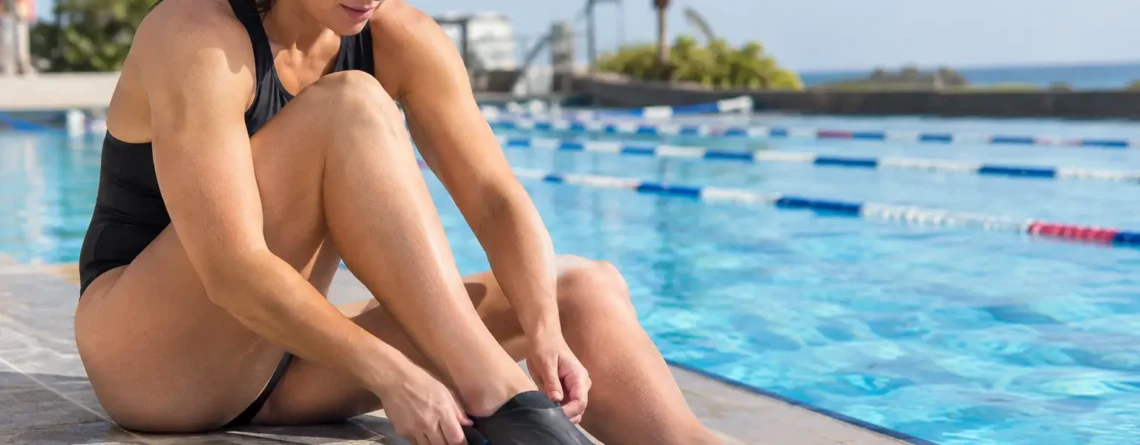
A fin that is too loose turns a kick set into a frustrating game of keeping your gear on. One that is too tight can make you notice your toes more than your body position. So, how should swimming fins fit? Snugly enough to stay put when you push off the wall and kick hard, but comfortably enough that you can wear them through a proper set without numbness, rubbing or cramping.
That sounds obvious, but fin sizing catches out plenty of swimmers. Shoe sizes are only a starting point, different brands shape their foot pockets differently, and the fit you want for a 20-minute technique set may not feel the same as a quick splash at the pool shop. A few simple checks will tell you far more than the number printed on the box.
How should swimming fins fit in the foot pocket?
Start with a dry fit, then test the fins in the water if you can. Your heel should sit all the way back in the foot pocket, with no obvious gap behind it. Your toes should reach towards the end without being sharply bent, jammed against hard rubber, or curled to make room.
A well-fitting full-foot fin feels close and secure around the sides and top of your foot. It should not slide around when you point and flex your toes. Give each fin a firm tug while it is on. If it comes off easily, or your heel lifts substantially, it is probably too large. That movement gets worse once you are swimming, pushing off walls and changing direction.
At the same time, tight is not automatically right. You should not feel a hard edge pressing into your Achilles, the top of your foot or the base of your toes. Tingling, numb toes and a strong pinching sensation are signs to take the fins off, not signs that they need a heroic “break-in” period. Most swim fins soften a little with use, but they do not magically become a full size larger.
The useful middle ground is a secure fit with even pressure. Think firm handshake, not vice grip.
Check the fit while kicking, not just standing still
Poolside sizing can be misleading. When you swim, water pressure, ankle movement and repeated kicking reveal problems quickly. If you have access to a pool, wear the fins for a few easy lengths before committing to a longer session.
Push off the wall, streamline, then kick gently. Notice whether the heel stays seated and whether the fin tracks straight ahead. A loose fin often makes a small slapping or squelching sensation as water moves in and out of the foot pocket. It may also twist slightly when you kick, which is annoying and makes it harder to focus on your stroke.
Then try a few stronger kicks. Your foot should remain stable inside the fin. If your toes repeatedly hit the end, the fit is too short or the pocket shape is wrong for your foot. If the fin rubs in one exact spot after only a few lengths, do not assume you will stop noticing it. During a longer squad session, that little hot spot has plenty of time to become a proper nuisance.
A new pair can feel more secure in water than it did when dry, especially with soft rubber or silicone pockets. But no fin should require you to force your foot in or leave deep, painful marks once you take it off.
Choose the right fit for your type of fin
Not every fin is meant to fit in exactly the same way. The style affects how much room you need and what you can wear with it.
Full-foot fins
Full-foot fins are the common choice for pool training, lap swimming and technique work. You wear them barefoot, so the pocket needs to be comfortable directly against skin. They should feel snug around the heel and arch, with enough toe room that you can point your feet naturally.
If you are between sizes, the better choice depends on the brand’s size guide and the shape of your foot. Swimmers with narrow feet may find the smaller size more secure, provided their toes are not crowded. Swimmers with broad feet, a high instep or longer toes often do better with a little more room. This is one reason a size range is only a guide, not a promise written in chlorine.
Open-heel fins
Open-heel fins use an adjustable strap at the back and are generally worn with neoprene booties or socks. They are more common for snorkelling, diving and some open-water situations than regular pool squad work.
With this style, fit the fin while wearing the footwear you will actually use. The strap should hold your heel in place without digging in or needing to be pulled as tight as possible. Too much strap tension can create rubbing, while too little lets your heel lift and the fin wobble. Check that the buckle sits comfortably and will not catch on anything when you kick.
Short training fins and longer blade fins
Blade length changes how a fin feels in the water, but it should not change the basic foot-pocket rules. Short fins are popular for regular pool sessions because they allow a quicker kick rhythm and are usually easier to manage in a busy lane. Longer fins create more resistance and can suit particular drill work, but they ask more of your ankles and legs.
If you are new to fins, a comfortable short training fin is usually the sensible place to start. You do not need the biggest blade in the pool to get useful feedback on body position and kick timing. In fact, a large, stiff fin that rubs or feels awkward may spend more time in the bottom of your swim bag than in the water.
Should you size up for swimming fins?
Usually, no. Full-foot swimming fins should not fit like roomy runners. Sizing up because they feel tight around the sides can leave you with heel lift and rubbing, particularly once the material gets wet.
However, sizing up can make sense if your toes are hitting the end, your foot is at the very top of a size range, or the pocket is clearly too narrow for your foot shape. The right answer is the size that holds your heel securely without compressing your foot.
Avoid trying to solve a poor fit by wearing thick socks inside full-foot pool fins. Thin fin socks can be useful for reducing friction with a slightly roomy pocket, or for swimmers prone to rubbing, but they also take up space. If a fin only works when you add layers, it may simply be the wrong size or model.
For open-heel fins, booties are part of the sizing equation. Size the combination, not just the bare foot.
Common fit problems and what they mean
A fin that slips off your heel is too large, too wide for your foot, or not seated properly. Check that your heel is fully back before assuming you need a different size. If it still lifts during strong kicking, go smaller if toe room allows, or look for a narrower foot pocket.
Toes pressing into the end means the fin is too short. Do not keep swimming in it hoping the rubber will stretch forward. You need more length or a different foot-pocket shape.
Pain across the top of the foot often points to a pocket that is too shallow or narrow. Going up a size may help, but a different model can be the better fix. Feet are inconveniently individual.
Rubbing at the heel or around the ankle may mean the fin is too loose and moving with every kick. It can also happen when the edge of the pocket is firm, even if the size is technically correct. A thin fin sock may help with minor friction, but it will not fix serious heel lift.
Cramping is a little less clear-cut. Fins add load to your kick and can make tired calves and feet complain, particularly if you have jumped from no fin work to a long set. First check the fit, then reduce the length or intensity of your fin sets while your ankles and feet get used to them. It is not a reason to force through a painful session.
Make sure your fins still fit after a few swims
Good fit is not a one-off test. Rinse fins in fresh water after the pool, especially if they have been in salt water, and keep them out of prolonged direct sun or a hot car. Heat can distort softer materials, while leaving them crushed under wet towels and kickboards can bend the blades.
Before a session, check for splits around the foot pocket, damaged straps on open-heel models and any rough edges that were not there before. A small tear or warped pocket can change the feel considerably. It is also worth checking your fin size again if you are buying for a growing child. A fin that is suddenly tight halfway through summer holidays is not a character-building exercise.
A practical final check before you keep them
Wear both fins, push off, kick a few easy laps and then a few faster ones. If your heel stays put, your toes have room, the pressure feels even and you stop thinking about the fins once you start swimming, you have probably got the fit right.
That is the whole point. Fins are there to support a useful session, whether you are working on your kick before work, adding variety to a squad set or building confidence for your first triathlon. The best pair is not necessarily the most expensive or the flashiest one on the lane rope. It is the pair that fits your feet, suits the training you actually do and lets you get on with the laps.