

August 4, 2026
Pull Buoy Training Tips for Stronger Swims
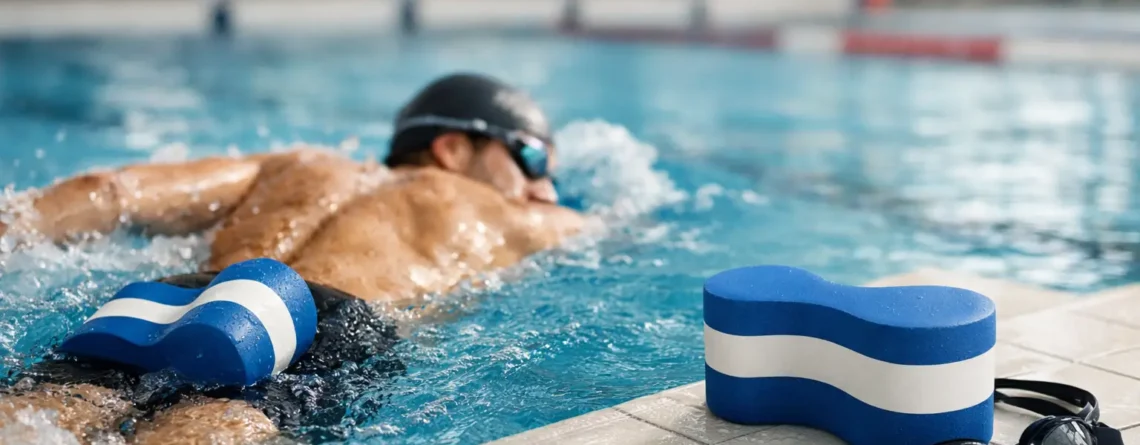
A pull buoy can make a slow, scrappy swim feel suddenly smoother – but only if you use it for more than an easy cruise between hard sets. These pull buoy training tips will help you build a more reliable freestyle stroke, find better body position and turn a simple piece of swim gear into purposeful training.
For swimmers and triathletes, the goal is not to become dependent on the buoy. It is to learn what an efficient line through the water feels like, strengthen the pulling muscles that drive you forward and carry those gains into full-stroke swimming.
Start with the right pull buoy position
Place the pull buoy high between your thighs, close to the top of your legs rather than down at your knees. A higher position supports your hips without forcing your legs too far apart. Give it a gentle squeeze. You should be holding it in place with light inner-thigh pressure, not clamping down so hard that your hips become stiff.
If the buoy slips out every few laps, do not immediately blame the gear. It often means your legs are separating or your core is switching off as you breathe. Reset, keep your legs long and let them trail quietly behind you.
Most adult swimmers suit a standard-sized pull buoy, while smaller swimmers may find a compact option easier to control. The right size gives your hips support without lifting your lower body so much that your stroke becomes unrealistic. It is a balance. A very buoyant pull buoy can feel great in the moment but may hide a weak body position that returns as soon as you swim without it.
Pull buoy training tips for better body position
The pull buoy takes kicking out of the equation, which makes it easier to notice where your body line breaks down. Think long from the crown of your head to your heels. Keep your gaze down and slightly forward, rather than lifting your head to look at the wall too early.
When you breathe, rotate your body to the side instead of lifting your head. One goggle should remain in the water. If your head lifts, your hips tend to drop, even with the buoy helping them float. That habit can cost you time and energy in every freestyle session.
Use a light, natural kick if it happens, but do not fight to kick hard around the buoy. Your focus is on a stable torso, relaxed legs and controlled rotation. A good pull set should make you feel connected through your core, not like you are dragging your legs behind you.
A useful check is to notice whether your stroke changes dramatically once you take the buoy away. Some difference is normal. If your hips sink straight away, reduce the length of your pull sets and spend more time improving your kick, balance and head position in regular freestyle.
Build a stronger catch, not just stronger arms
A pull buoy is commonly called an arm workout, but strong swimming comes from a better catch and a coordinated pull through the water. Your shoulders, back, core and lats all contribute. If you simply windmill your arms faster, you may tire out without gaining much speed.
Set up each stroke by reaching forward with a relaxed hand, then press the water back with your forearm and hand working together. Keep the elbow higher than the hand as you begin the pull. This gives you a larger surface area to hold water, helping you move forward rather than slipping through the stroke.
Avoid crossing your hand over the centre line when it enters the water. A crossed-over entry can make you snake from side to side and place extra stress on your shoulders. Aim each hand forward in line with the same-side shoulder.
Do not rush the recovery either. A controlled recovery and a patient front end give you time to set the catch. You are looking for pressure on the water, not frantic arm speed.
Add paddles only when your technique holds up
Hand paddles can pair well with a pull buoy, especially for swimmers who want more pulling strength. They also magnify mistakes. If you are dropping your elbow, crossing over or feeling shoulder pain, paddles can turn a small issue into a bigger one.
Start with the pull buoy on its own. Once you can hold a clean line and maintain pressure through the pull, use small or medium paddles for short repeats. Keep the effort controlled and take them off as soon as your stroke falls apart. More resistance is not automatically better training.
Make your pull sets purposeful
Long, steady pulling has a place, particularly for triathletes building endurance. But repeating the same comfortable pace for every session eventually limits progress. Give each pull set a job: technique, endurance, threshold effort or speed control.
Try these sessions across your normal swim week rather than cramming them into one big pool session:
- For technique, swim 8 x 50 metres with the pull buoy on 15 to 20 seconds rest. Hold an easy-to-moderate pace and focus on quiet legs, a long body line and a high-elbow catch.
- For endurance, swim 3 x 300 metres at a sustainable effort with 30 seconds rest. Keep your stroke count consistent from the first 50 to the last.
- For stronger pacing, swim 12 x 100 metres with 15 to 20 seconds rest. Make the first four controlled, the middle four firm and the final four your best sustainable effort.
- For race-specific work, alternate 100 metres with a pull buoy and 100 metres full freestyle for 800 to 1,600 metres. Match the body position and rhythm you found with the buoy when you return to normal swimming.
The intervals should suit your current fitness and pool experience. A newer swimmer may begin with 25- or 50-metre repeats and extra rest. A confident swimmer can shorten the rest, increase the distance or use a faster target pace. Quality matters more than forcing a session that is too hard to hold with good form.
Do not let the buoy replace kick training
Your kick matters, even if you are a distance swimmer or triathlete who does not rely on a huge six-beat kick. It helps you balance, rotate and maintain rhythm. Training with a pull buoy for every lap can leave that part of your stroke underdeveloped.
A practical approach is to use the buoy for around a quarter to a third of your total freestyle volume. For a 1,500-metre session, that might mean 400 to 600 metres of pull work. The right amount depends on your needs. Swimmers with sinking legs may benefit from short, frequent pull sets while they work on balance, but they should still include kicking drills and regular full stroke.
Include simple kick work with a board, on your side, or in a streamlined position on your back. You do not need to smash out endless kick laps. A few focused repeats can improve ankle looseness, leg endurance and awareness of how your lower body sits in the water.
Watch for these common pull buoy mistakes
The biggest mistake is using the buoy to cover up poor technique. If it makes you feel fast but your regular freestyle stays inefficient, the training is not transferring. Alternate pull swimming with full stroke and pay attention to the same cues in both.
Another common issue is overloading the shoulders. Pull sets reduce leg involvement, so your upper body works harder. Build volume gradually, particularly if you are returning to swimming, adding paddles or managing a previous shoulder niggle. Persistent pain is a reason to stop, reassess your technique and seek qualified advice.
Some swimmers also hold their breath or breathe only to one side during pull work because the set feels controlled. Keep your breathing rhythm natural. Bilateral breathing can be useful for practising symmetry, but it is not compulsory. Breathe in the pattern that lets you keep a relaxed, repeatable stroke.
Finally, do not treat the pull buoy as a flotation device for chatting at the wall. Keep your rest honest, know the purpose of the next repeat and push off with intent. Small habits create stronger sessions.
Choose gear that earns its place in your swim bag
A dependable pull buoy should be comfortable to hold, buoyant enough to support your hips and tough enough for regular chlorine exposure. It is one of the most affordable ways to add variety to pool training, especially when paired with goggles, a cap and a simple session plan. 4Sports stocks practical swim training essentials for athletes who want to train with purpose without blowing the budget.
Bring your pull buoy into the pool for one focused set this week. Feel the line it creates, work on a cleaner catch, then take it away and keep that same control through every freestyle lap.