

November 9, 2026
Swim Cap Fitting: Get the Right Fit First Time
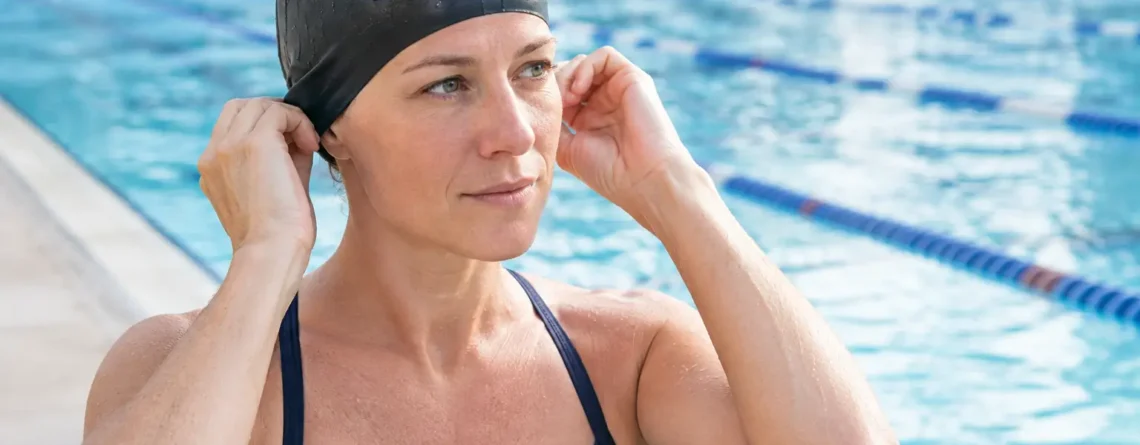
A swim cap that rolls up your forehead, traps your hair painfully or pings off halfway through a push-off is not a character-building exercise. It is usually a swim cap fitting problem. The good news is that most swimmers do not need a fancy cap or a drawer full of options. They need the right material, a sensible fit and a quick routine for putting it on.
For lap swimming, a cap mainly keeps hair out of your face, reduces distraction and gives goggles a more stable surface to sit against. For squad sessions, it also keeps loose hair out of the lane and filter system. It will not keep your hair completely dry, despite what hopeful first-timers may have heard at the pool.
Swim cap fitting starts with the right material
Before worrying about size, choose a cap material that suits how and where you swim. Material changes the feel, durability and amount of stretch more than any logo on the side.
Silicone caps: the sensible regular-swimmer choice
Silicone is usually the easiest place to start for regular pool use. It is soft, stretchy and reasonably durable, with a smooth feel that does not grip hair as aggressively as latex. If you swim a few times a week, have longer hair, or simply dislike the sharp tug of a thin cap, silicone is generally worth the small extra spend.
A silicone cap tends to sit securely without feeling like it is trying to squeeze your thoughts out through your ears. It can still feel snug when new, though. That is normal. A cap should stretch around your head, not sit loosely like a beanie.
Latex caps: cheap, light and less forgiving
Latex caps are thinner and often cheaper. They suit swimmers who want a basic cap for occasional pool sessions, school swimming or race day spares. They can feel cooler and take up almost no room in a gear bag.
The trade-off is durability and comfort. Latex is more likely to snag hair, tear when overstretched and degrade if it lives damp at the bottom of your swim bag. If you are bald or keep your hair very short, this may not worry you. If you have thick, curly or long hair, silicone is usually the less annoying option.
Fabric caps: comfortable, but not for everyone
Fabric caps are easy to put on and gentle on hair. They suit children, casual recreational swimming and anyone who finds silicone or latex too fiddly. The downside is that they let more water through and may shift during harder sets or fast turns.
They are fine for gentle laps and lessons. For regular training, a fabric cap can become one more thing you adjust at the wall when you would rather get on with the set.
How should a swim cap fit?
A well-fitted swim cap should cover the crown of your head and sit comfortably around the hairline without painfully digging in. It should stay in place through a push-off, tumble turn and a few vigorous strokes. Some water may get underneath it, especially around the edges. That does not mean the fit is wrong.
Most adult caps are one size because silicone and latex stretch a long way. That makes shopping easier, but it does not mean every cap feels identical. Thicker silicone often feels more supportive, while a thin latex cap can feel tighter despite stretching easily. Junior caps are smaller and better suited to children with smaller head sizes, rather than simply being a cheaper adult option.
If a cap gives you a headache within a few minutes, leaves deep marks long after swimming, or repeatedly rides up, try a different material or shape. Do not assume you have to tolerate it because swimming gear is meant to be uncomfortable. Goggles, yes, occasionally. A basic cap, no.
For swimmers with very thick, long or braided hair, look for a cap specifically made with extra room. Stretching a standard cap over a substantial bun can work in a pinch, but it puts strain on the cap and often creates a lump that interferes with goggle straps. An extra-volume cap is not essential for everyone with long hair, but it is often a useful buy when standard caps keep creeping upward.
The easiest way to put on a swim cap
The fastest method depends on your hair length, but the key is to spread the cap open rather than pulling it down from one tiny point. A dry cap and dry hands make the job easier. If the cap is wet, it can cling to itself and behave like a slippery jellyfish before an early-morning session.
With short hair, place both hands inside the cap and hold the edges open. Start at your forehead, pull it over the crown and bring it down towards the nape of your neck. Smooth any folds with your palms, then put your goggles on over the cap.
With longer hair, tie it in a low ponytail or a low bun near the nape. A high bun creates bulk at the top and encourages the cap to slide up. Start with the front edge at your forehead, then pull the cap back and down over your hair. Tuck in loose ends gradually rather than trying to force the whole lot in at once.
If you have plenty of hair, a useful two-person method is to ask a training mate to hold the front edge while you pull the back of the cap down. This is particularly handy for children before lessons. There is no medal for winning a solo wrestling match with a cap in the change room.
Where should goggles sit?
For most pool swimming, wear your goggles over the cap. The straps stay put better, hair is less likely to catch and taking goggles off between sets is easier. Position the strap around the widest part of the back of your head, not too low near the neck where it can drag the cap upward.
Some open-water swimmers wear goggle straps under their cap. This can stop goggles from being knocked off in a crowded start, but it also makes them harder to remove or adjust. If you are preparing for your first triathlon, practise the setup you plan to use on race morning. Transition is not the ideal place to discover that your cap and goggles have formed a complicated knot around your ponytail.
Keep the cap’s front edge just above your eyebrows. Pulling it too far down can interfere with the goggle seal and narrow your view. Leaving it too high may expose loose hair and give the cap more chance to roll backwards.
Common swim cap fitting problems and simple fixes
When a cap slips off, check your hair first. Heavy conditioner, oils and very wet hair can make the surface slippery. You do not need to dry your hair completely, but squeezing out excess water and avoiding a high bun can help. A silicone cap with a little more grip is also a practical move.
When the cap keeps rolling up, it is often being stretched unevenly. Take it off, centre it at the forehead, then pull it down evenly at the sides and back. A cap that is old, stretched or starting to split has earned retirement. Keep it as an emergency spare if you like, but do not expect it to behave during a hard session.
When hair catches badly, avoid yanking the cap off in one heroic motion. Roll it slowly from the front or lift the edge around the ears first. Silicone is kinder than latex here, and a fabric cap is worth considering if comfort is your main concern.
When ears feel folded or pinched, pull the cap edge slightly back or forward until it sits naturally. Some swimmers prefer ears inside the cap for a secure feel; others leave them out. Either is fine if the cap stays put and your goggles seal properly.
Looking after your cap so it lasts
Rinse your cap in fresh water after swimming, especially after a chlorinated pool or saltwater session. Let it air-dry out of direct sun before stuffing it back into your bag. Australian summer heat can turn a forgotten cap on the dashboard or pool deck into a sticky, brittle mess.
Keep it away from sharp fingernails, jewellery and rough Velcro. A tiny tear in latex tends to become a big tear at exactly the wrong moment. Carrying a spare cap in your swim bag is cheap insurance, particularly for squad, race day or when you are swimming before work and cannot be late because your cap has decided otherwise.
A good cap should fade into the background once you start swimming. Choose the material that feels right, fit it evenly and replace it when it stops doing its quiet, useful job. Then you can save your mental energy for the set written on the whiteboard, which is usually challenging enough.