

August 10, 2026
Swim Parka vs Change Robe: Which One Wins?
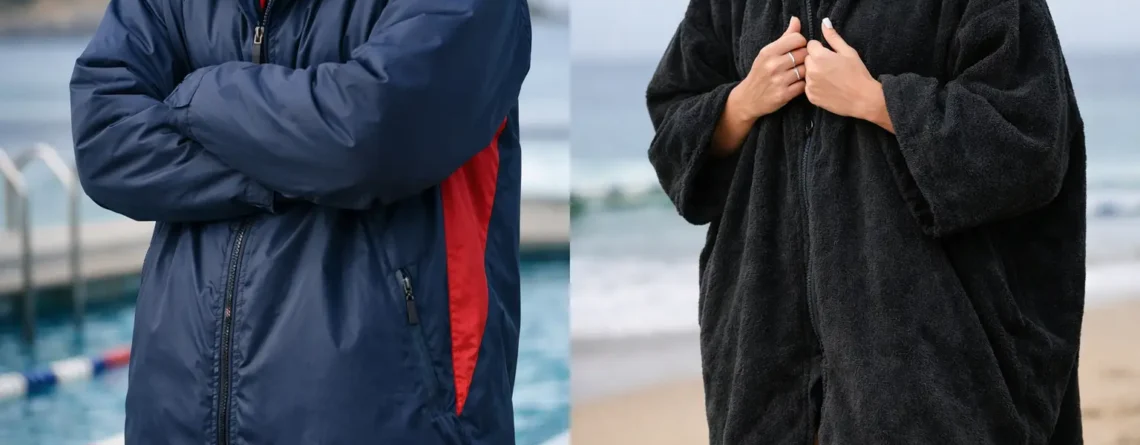
The last set is done, your hair is dripping and a cold breeze cuts across the pool deck. That is when the swim parka vs change robe decision matters most. Both are made for life around water, but they solve slightly different problems. Choose well and you will get warm faster, change with less fuss and stay focused on the next session.
For swimmers, triathletes, ocean dippers and parents doing early starts at the local pool, this is not just another layer to throw in the gear bag. It is the piece you reach for when the temperature drops and you need to recover between efforts.
Swim parka vs change robe: the core difference
A swim parka, also called a deck coat, is primarily an insulated outer layer for swimmers. Its job is to trap warmth over wet swimwear before training, between races or immediately after getting out of the water. It usually has a roomy cut, a full zip, a bonnet and a water-resistant outer shell.
A change robe is built around privacy as well as warmth. It is a longer, loose-fitting robe that gives you room to remove wet bathers and put on dry clothes underneath. Many have a towelling lining or absorbent inner fabric, while others use fleece insulation and a waterproof shell.
The names can overlap. Some products labelled as parkas are long and roomy enough to change in, while some change robes are warm enough to wear all morning at a winter meet. Instead of getting caught up in the label, think about your main use: staying warm on deck, getting changed outdoors, or doing both.
Choose a swim parka if warmth comes first
A swim parka is a smart pick for squad swimmers, racing swimmers and triathletes who spend time waiting around in wet gear. On a cold morning, your body cools quickly after a hard set. Pulling on a well-insulated parka helps hold onto that hard-earned warmth while you stretch, chat to your coach or wait for the next event.
Parkas are often less bulky than a fully lined changing robe, which can make them easier to wear over bathers without feeling swallowed up by fabric. A two-way zip can also help when you are sitting down, while zip pockets keep goggles, a locker key or mobile close by.
Look for a bonnet with enough depth to cover wet hair, cuffs that reduce draughts and an outer fabric that can handle splashes and light rain. A longer hem gives better coverage, but check it does not get in the way when walking from the car park to the pool.
A parka is especially useful if you normally change in a changeroom. You get the insulation you need without paying for features you may rarely use. It is also a practical option for junior swimmers who need a warm layer for long carnivals but do not necessarily need to change at the side of the pool.
Where a swim parka is less ideal
A parka is not always designed with enough internal space for a full clothing change. You may be able to pull shorts or trackies on underneath, but taking off wet bathers without exposing yourself can be awkward. If beach sessions, open-water swimming or surf club training are regular parts of your week, that limitation is worth considering.
Choose a change robe if privacy matters most
A change robe earns its place when there is no warm, dry changeroom nearby. Think a windy beach after an ocean swim, a triathlon transition area, a lakeside training session or a car park after the kids’ lesson. The generous cut creates a private space to get out of wet gear and into dry layers.
That roominess is the feature to focus on. You should be able to lift your arms, wriggle out of bathers and pull on underwear or shorts without fighting the robe. Longer sleeves and a hem that reaches below the knee make the process easier and warmer.
If you are choosing a robe for frequent outdoor use, a waterproof or water-resistant outer layer is valuable. It shields you from wind and drizzle while the lining helps you warm up. A soft towelling inner is great for drying off, while fleece or synthetic pile insulation usually feels warmer in cold conditions. Neither is automatically better. It depends on whether you need it to replace a towel or act as a serious weather layer.
For families, a change robe can reduce the classic post-swim scramble. Rather than balancing towels, clothes and a child who is suddenly freezing, they can get covered quickly and change at their own pace. That makes it useful beyond competitive sport.
The trade-off with a change robe
The extra fabric that makes changing easy also makes some robes heavier and bulkier in a bag. They can take longer to dry, especially after a wet beach session, and a thick lined model may feel too warm for indoor pool use. If you only swim at a heated facility and head straight to a changeroom, a robe could be more than you need.
Compare the features that affect real use
The best choice comes down to the conditions you train in, not the biggest feature list. Start with warmth. Thick insulation and a wind-resistant shell are useful for winter mornings, open water and long carnivals. For a heated indoor pool, a lighter parka may be far more comfortable.
Then consider length. A mid-thigh parka is easier to move in and works well over swimwear. A longer robe provides more protection from the elements and more confidence while changing outside. Taller athletes should check garment length carefully, while younger swimmers need to avoid hems that drag underfoot.
Fit matters too. Both garments should be roomy enough to wear over wet clothes, but a changing robe needs extra space through the shoulders and body. A parka can sit closer to the body if its purpose is warmth rather than changing. Check the size guide rather than automatically sizing up, as an oversized garment can let cold air in and make carrying kit more awkward.
Pockets are not a minor detail. Secure zip pockets protect small essentials, and fleece-lined pockets are a welcome bonus on frosty mornings. A sturdy zip, lined bonnet and easy-grab zip pullers matter when your hands are cold or wet.
What should swimmers, triathletes and beachgoers buy?
Pool swimmers who train early, race at carnivals or spend plenty of time on deck will usually get the best value from a swim parka. It is a reliable warm-up and warm-down layer that works over bathers and training clothes. Choose one with a weather-resistant shell if you walk between the pool and car in winter.
Triathletes and open-water swimmers often get more from a change robe. The ability to change beside the water, warm up after a cold swim and keep the wind off makes it a strong all-rounder. If your events involve long waits before or after a swim leg, a warm robe can make the day far more comfortable.
Beachgoers and families should lean towards a change robe when privacy and easy changing are priorities. If it is mainly for throwing on after lessons or wearing to and from an indoor pool, a swim parka may be the lighter, more affordable option.
There is also a case for owning both. A streamlined parka can live in the regular swim bag for squad sessions, while a change robe comes out for beach days, winter ocean swimming and weekend events. But if you are buying one piece first, buy for the conditions that make you most uncomfortable. Gear should solve the problem you actually have.
Care tips for a longer-lasting layer
Rinse your parka or robe after exposure to chlorine or salt water, particularly around the zip and cuffs. Hang it to dry inside out in a well-ventilated spot, but avoid leaving it baking in direct sun for days. Heat can wear down waterproof coatings and leave fabrics feeling stiff.
Do not pack it away damp after training. It is tempting after a long session, but a wet lined robe can quickly develop odour. If you need to put it in the boot for the trip home, take it out as soon as you can and let it dry properly.
The right layer turns the coldest part of swimming into one less thing to think about. Pick the warmth, coverage and changing space that fits your routine, then get back to chasing stronger sessions. At 4Sports, practical swim gear is about helping every athlete show up ready – without overspending.